AI Marketing for Tour Operators: Turn Inquiries into Bookings




Turn your tour inquiries into bookings on autopilot.
Get Free AI Audit →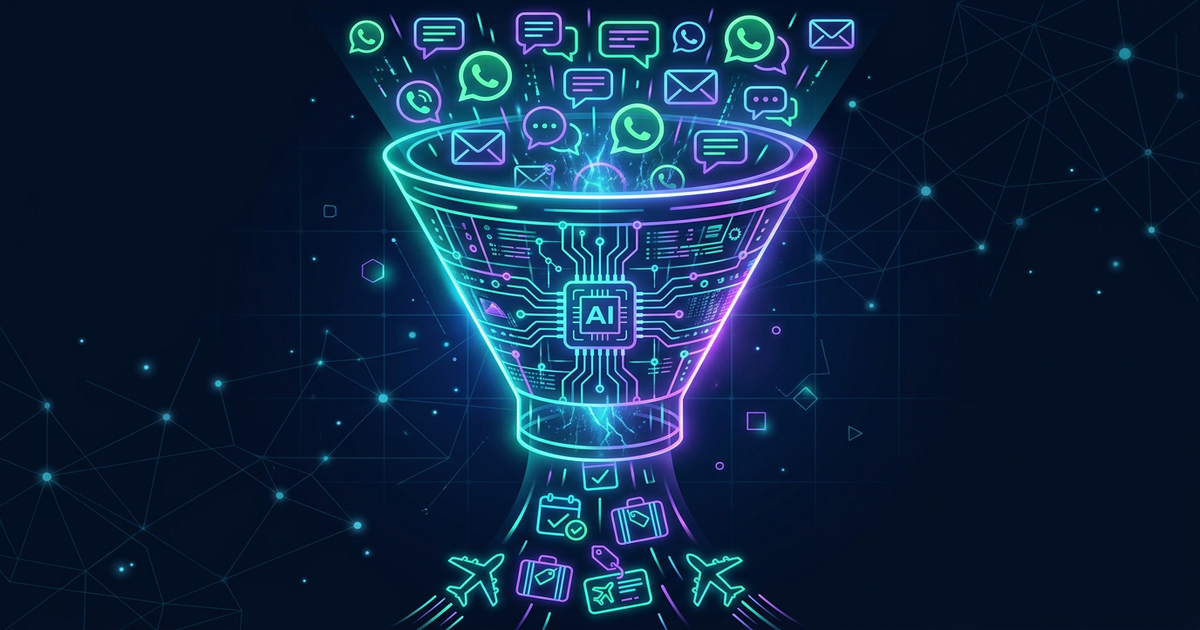
Travel is one of the most emotional, high-involvement purchases a consumer makes. When a traveler decides to book a bespoke safari in Kenya or a luxury cruise along the Amalfi Coast, they start in a state of high excitement. To feed this excitement, they typically submit inquiries to 3 to 5 different tour operators or travel agencies simultaneously.
And this is where the race is won or lost. In the modern travel landscape, the agency that responds first with a high-quality, professional, and personalized touch captures the deal. The others are simply ignored. If your tour agency relies on manual inbox checking and takes 12 to 24 hours to reply, you are losing over half of your potential pipeline to faster, more automated competitors.
To scale, you need to transition from manual, reactive tracking to an automated travel lead workflow. This guide breaks down the exact steps to implement an AI-powered lead capture, qualification, and nurture framework that engages travelers instantly and turns cold traffic into confirmed, paid bookings on autopilot.
Table of Contents
- The Tour Operator's Leakiest Funnel (The Speed-to-Lead Crisis)
- What is a Travel Lead Autonomous Workflow?
- Step 1: Multi-Channel Lead Capture & Instant Engagement
- Step 2: Automated Qualification & Customer Profiling
- Step 3: Conversational Itinerary Nudging (RAG Preview)
- Step 4: The 3-Step WhatsApp & Email Nurture Sequence
- Step 5: Abandoned-Quote Recovery Workflows
- Your Phased Setup Roadmap
- Key Performance Metrics to Track
- Frequently Asked Questions
1. The Tour Operator's Leakiest Funnel (The Speed-to-Lead Crisis)
If you analyze where your marketing budget is wasted, it rarely is the top of the funnel. You are likely getting clicks and inquiry submissions. The leakage happens in the follow-up gap. According to industry-wide lead response studies:
- The First-Responder Advantage: An astonishing 78% of customers choose to book with the first company that responds to their inquiry. If you aren't first, you are competing for the remaining 22%.
- The 5-Minute Rule: Responding to an online lead within 5 minutes makes you 21 times more likely to qualify them compared to responding after 30 minutes.
- The 10-Minute Cliff: Waiting longer than 10 minutes causes a 400% drop in the likelihood of qualifying a traveler.
Yet, the average response time for boutique travel agencies sits at 14.5 hours. When a traveler submits an inquiry on a Sunday evening, they don't want to wait until Monday morning for a reply. By then, their excited mood has faded, or another operator has already qualified them and booked a call. Speed is the ultimate conversion multiplier.
Key Takeaway
Speed to lead is not about booking the entire trip in 5 minutes. It is about acknowledging the customer, qualifying their intent, and securing their exclusive attention before they click on a competitor's ad. AI allows you to close this gap 24/7 without hiring around-the-clock sales agents.
2. What is a Travel Lead Autonomous Workflow?
An autonomous lead workflow is a system of interconnected software modules coordinated by AI. Instead of letting inquiries sit in separate email lists, website forms, and WhatsApp chats, the workflow captures them in real-time, qualification is handled by conversational AI agents, and lead files are formatted and synced directly to your CRM.
3. Step 1: Multi-Channel Lead Capture & Instant Engagement
Modern travelers do not want to be restricted to one communication channel. A baby boomer might prefer email, while a millennial or Gen Z traveler will reach out via Instagram Direct Message or WhatsApp. To maximize capture rates, your marketing must listen everywhere.
By connecting API webhook triggers from your website forms, WhatsApp Business, Instagram DM, and Facebook Messenger to a single AI lead engine, you ensure that no inquiry falls through the cracks. The moment a message lands, the AI triggers an immediate, personalized response in the exact channel the traveler used, establishing the 90-second speed-to-lead benchmark.
4. Step 2: Automated Qualification & Customer Profiling
Not all leads are created equal. Travel agents waste hours on "tyre-kickers" who have no budget or are just looking for free itinerary ideas. Handing raw leads to your team results in low morale and wasted sales time.
Instead, let the AI agent qualify the traveler conversationally. By engaging in a friendly, low-pressure dialogue, the AI captures critical profiling details before an agent gets involved:
- Travel Window: Exact dates or preferred months.
- Party Dynamics: Number of adults, seniors, or kids (essential for hotel room counts and safety rules).
- Estimated Budget: The per-person target spend (excluding international flights) to separate luxury planners from budget travelers.
- Vacation Style: Adventure-seeking, slow travel, food-focused, historical, or beach relaxation.
- Must-Have Experiences: Specific bucket-list items (e.g., "Must see a hot air balloon over Cappadocia").
This structured profile is instantly synced to your CRM, and a notification is dispatched to the team, showing a complete profile before the traveler even speaks to a human.
5. Step 3: Conversational Itinerary Nudging (RAG Preview)
One of the best ways to keep a qualified lead excited is to send them a quick, tailored recommendation. In the past, this was impossible to automate because itinerary drafting took hours. In 2026, tour operators use Retrieval-Augmented Generation (RAG) to solve this.
By indexing your agency's library of past successful trips, destination PDFs, and local partner directories in a vector database, the AI lead assistant can instantly construct a mini-itinerary preview. If a traveler qualifies as a luxury adventure seeker headed to Costa Rica, the AI can automatically generate and text them a 3-day sample teaser (e.g., "Day 1: Private canopy tour in Monteverde; Day 2: Arenal hot springs retreat...") within two minutes. This keeps user engagement extremely high while your custom travel designer works on the full, official proposal.
6. Step 4: The 3-Step WhatsApp & Email Nurture Sequence
To help you implement this immediately, here are three highly effective, viral-ready copy-paste templates designed to move travelers from raw inquiry to a scheduled planning call. These sequences use a hybrid email and WhatsApp setup to maximize open rates.
7. Step 5: Abandoned-Quote Recovery Workflows
One of the biggest leaks in the travel sales pipeline is the "ghosting" phase. An agent spends hours crafting a beautiful 10-day custom proposal, emails the PDF link, and... silence. The traveler gets distracted, looks at other quotes, or simply forgets to reply.
Instead of relying on agents to manually write follow-up notes, let the automated workflow handle quote recovery. The moment a proposal link is opened, the system monitors client behavior. If they spend time scrolling the itinerary but don't click the secure Stripe payment link within 48 hours, the system triggers a series of gentle, automated "quote recovery nudges":
- Nudge 1 (Day 2): A friendly WhatsApp message asking if they had any questions about the routing or activities.
- Nudge 2 (Day 5): An automated email highlighting local guides or dining spots near their selected hotels, adding high-value content rather than a dry "just checking in".
- Nudge 3 (Day 9): A booking urgency alert (e.g. "We noticed boutique hotel rooms are filling up fast for your selected dates, would you like us to hold the rooms for 24 hours?").
This automated multi-touch nurturing recovers up to 28% of abandoned travel quotes, saving massive amounts of potential revenue.
8. Your Phased Setup Roadmap
Transitioning to an automated marketing engine should be handled in structured phases to ensure no disruptions to your day-to-day operations. Here is a recommended 4-week rollout schedule:
Week 1: Channel Integration & Webhooks
Connect all lead capture entry points (Facebook Ads, Instagram, Web Forms, WhatsApp API) to a central workflow router using n8n or Zapier.
Week 2: AI Qualification Tuning
Set up conversational AI triggers to ask qualification details and sync these custom fields (budget, party size, dates) straight into HubSpot/CRM.
Week 3: Indexing RAG Assets
Import past itineraries, local partner agreements, hotel descriptions, and local guides into a unified knowledge base to feed the RAG itinerary builder.
Week 4: Quote Nurture & Checkout Triggers
Build automated email and WhatsApp follow-up campaigns, connecting digital proposal software to your Stripe checkout system.
9. Key Performance Metrics to Track
To measure the growth and ROI of your travel lead automation workflow, audit these key indicators monthly:
| Performance Metric | Legacy Manual Baseline | Automated Target | Revenue & Operational Impact |
|---|---|---|---|
| First-Response Time | 12–18 Hours | < 90 Seconds | Stops competitors from taking the lead, secures first-responder edge. |
| Lead-to-Call Booking Rate | 14% | 32% | More qualified leads landing on sales calendars. |
| Proposal Turnaround Time | 2–3 Days | < 15 Minutes (Draft) | Keeps client excitement high while it's fresh. |
| Ghosted Quote Recovery | 5% recovery | 28% recovery | Reclaims lost opportunities automatically. |
| Agent Admin Time Saved | 15 Hours/Week | < 2 Hours/Week | Allows staff to focus entirely on closing deals and consulting. |
10. Frequently Asked Questions
Here are the common questions tour operators ask about implementing lead automation workflows.
Will AI make our boutique travel agency feel robotic or impersonal?
Not if it's set up correctly. The AI should never pretend to be a human. Instead, it acts as a digital travel assistant helping collect trip basics and providing instant details. Human experts handle the creative customization, which makes clients feel both cared for and highly impressed by your speed.
How do we make sure our automated WhatsApp campaigns comply with local anti-spam regulations?
All automated triggers use verified WhatsApp Business APIs. Leads are only initiated after a traveler opts in on your web forms or messages your business number first. In addition, every automated template includes a simple "Reply STOP to opt-out" option, protecting your sender score.
Can this workflow connect with our existing booking and back-office platforms?
Yes. Jogi AI workflows use standard JSON APIs to transfer customer profiles and trip details across popular CRMs (HubSpot, Salesforce, Zoho) and travel systems, ensuring you don't have to overhaul your current database setup.
Ready to Scale Your Tour Operator Bookings?
Talk to our integration team about deploying a custom AI Marketing Engine to qualify leads and follow up on quotes automatically.
Create Your Free AI Twin →Related Articles
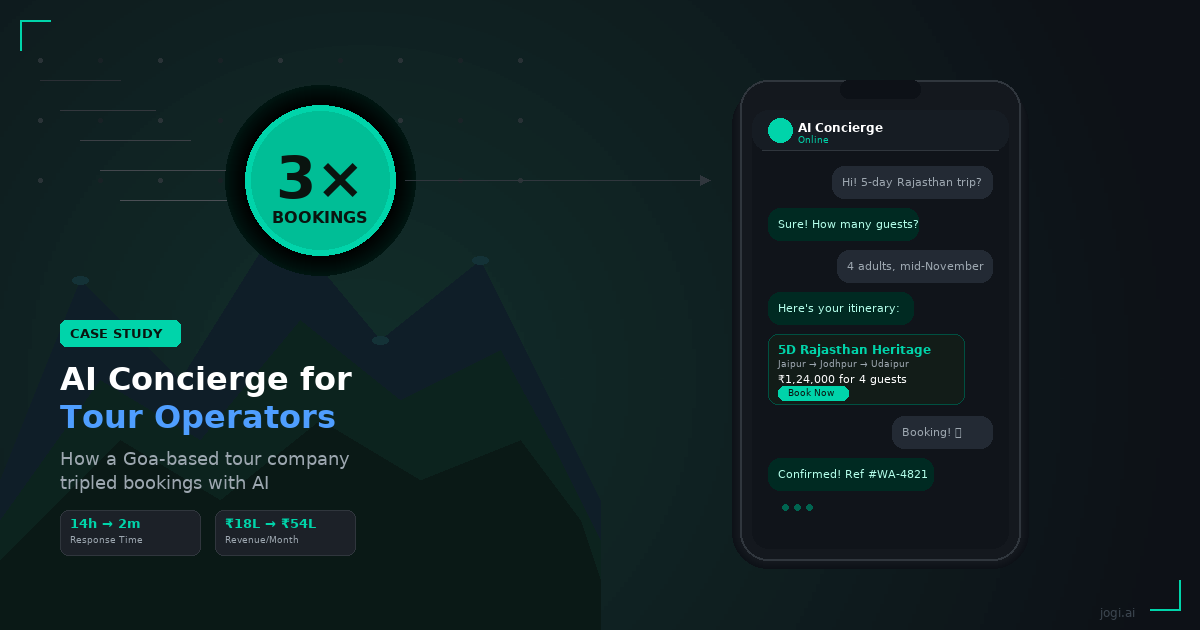
Case Study: A Tour Operator That 3x'd Bookings with an AI Concierge
How Wanderlust Adventures went from 14-hour response times to instant AI quoting — tripling their monthly bookings and growing revenue.
Read More →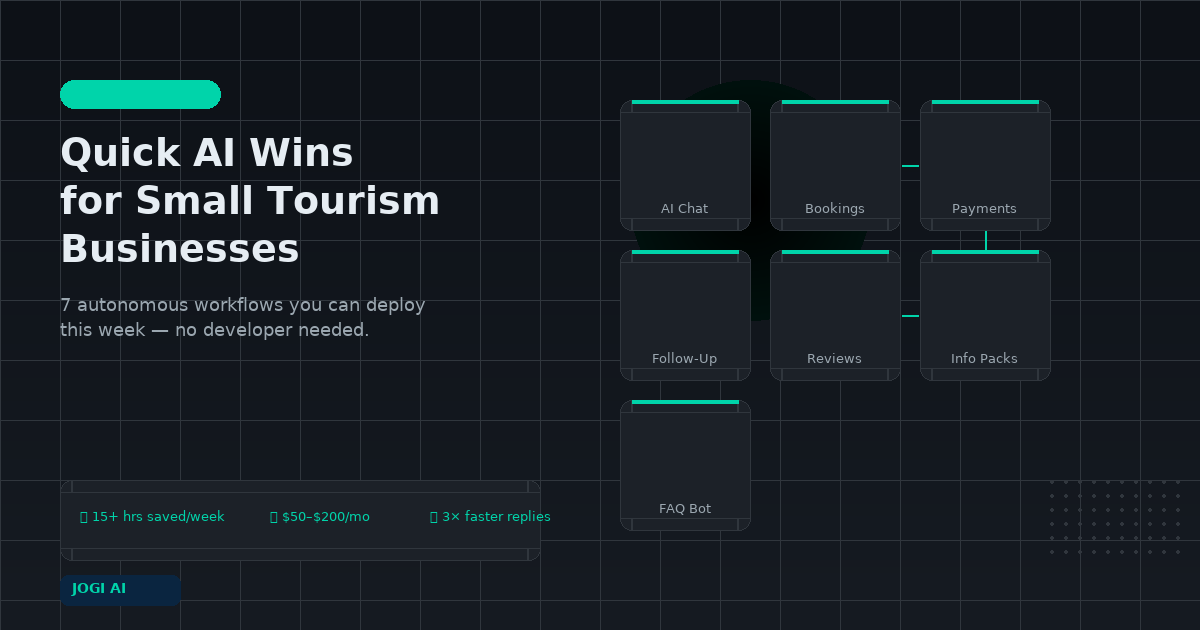
Quick AI Wins for Small Tourism Businesses
7 practical AI automations any small tour operator can deploy this month — from 24/7 inquiry bots to automated review requests.
Read More →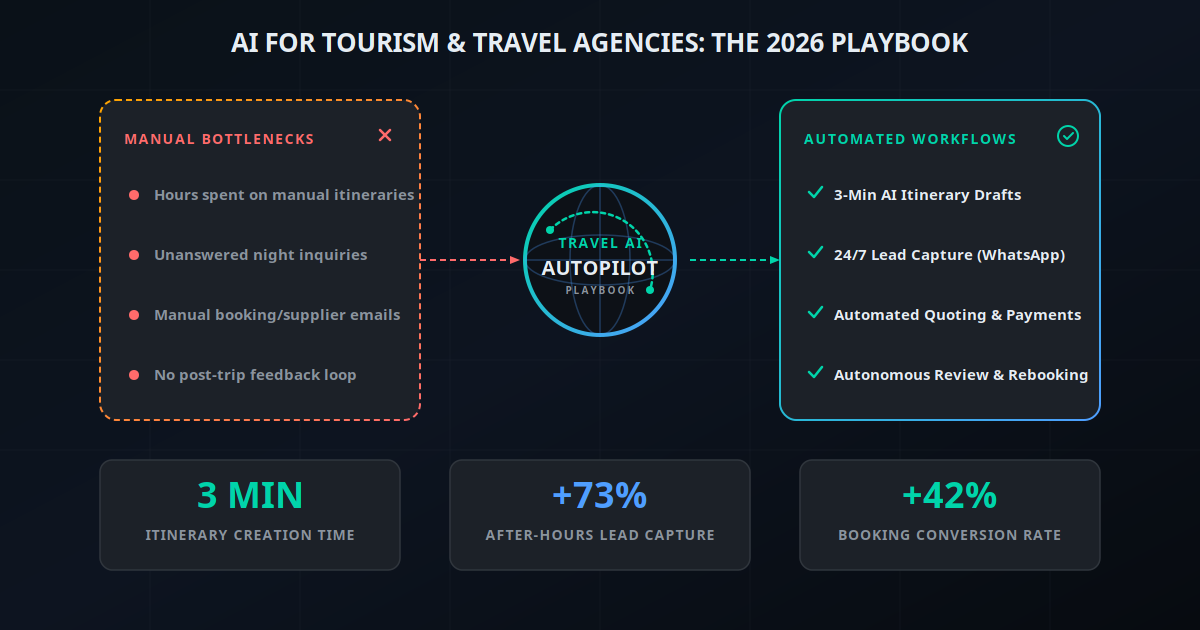
AI for Tourism & Travel Agencies: The 2026 Playbook
Discover how tourism and travel agencies use AI to automate itinerary building, capture 24/7 leads, manage bookings, and increase revenue.
Read More →