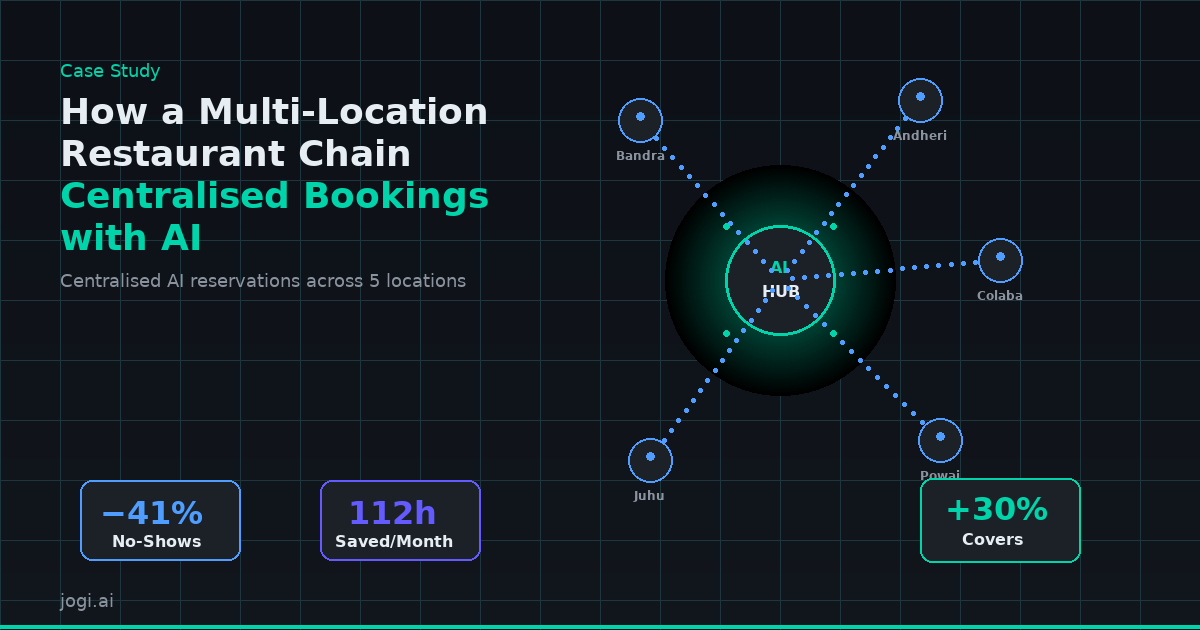
How a Multi-Location Restaurant Chain Centralised Bookings with AI




Key Takeaway
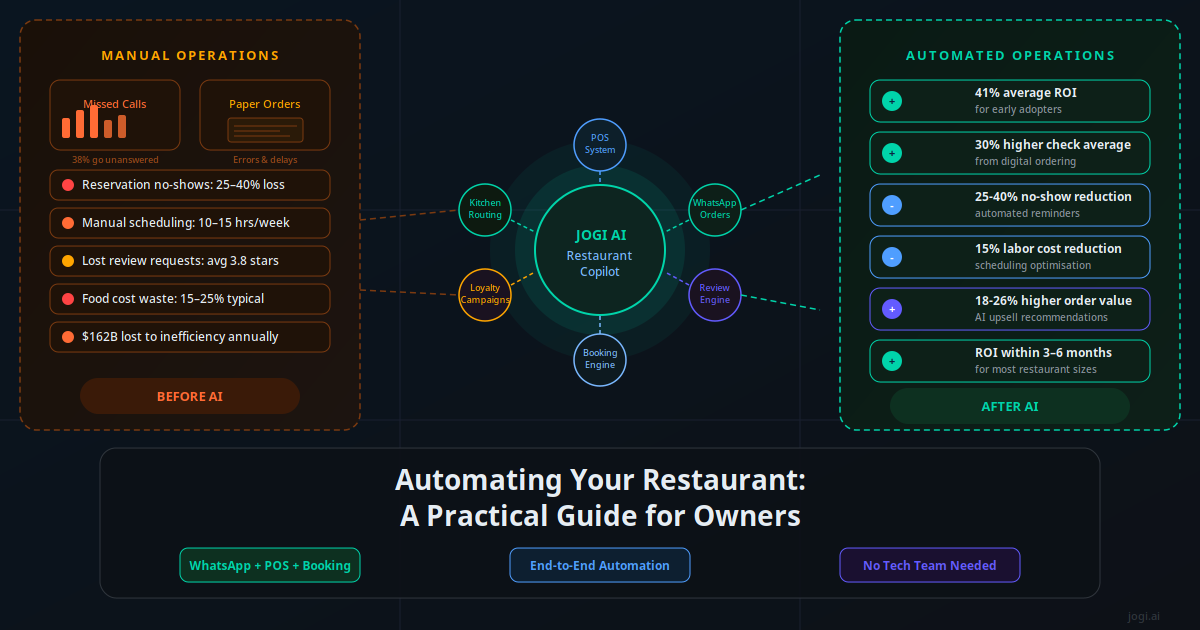
By replacing isolated, branch-specific phone reservations with a centralised, CRM-connected AI reservation hub, restaurant chains can eliminate missed booking calls, reduce host admin labor, slash weekend no-shows by 41%, and increase cover volume by 30% across all venues.
Introduction: The Multi-Location Booking Challenge
Managing reservations for a single busy restaurant is a balancing act. For a multi-concept, multi-location restaurant group, it can easily turn into an operational bottleneck. When each outlet manages its own incoming reservation phone lines, customer data remains siloed, guest support becomes inconsistent, and hundreds of potential covers slip through the cracks during service rushes. Managers are forced to split their attention between welcoming guests at the door and answering ringing landlines.
As restaurant brands expand, the cost of fragmented communications grows exponentially. Traditional solutions—like hiring an off-site call centre or forcing front-of-house hosts to answer phones during busy weekend shifts—either dilute the brand experience or pull valuable labor away from the dining floor. This case study details how a premium 5-location restaurant group partnered with Jogi AI to implement a centralised, autonomous reservation workflow, transforming their front-of-house operations from a chaotic administrative chore into a high-efficiency revenue driver.
The Indus Bistro Group: A 5-Location Profile
To understand the impact of the solution, we must look at the specific operational footprint of our subject. The Indus Bistro Group operates five distinct, high-volume venues across Mumbai, India. Each location targets a slightly different culinary niche, yet they share a central administrative head office and a common target audience of premium diners. The group's locations include:
- Indus Bistro (Bandra): Modern Indian Cuisine. 120 seats. Averaging 1,800 weekly covers.
- Indus Grill (Andheri): Progressive Charcoal Barbecue. 140 seats. Averaging 2,100 weekly covers.
- Saffron Trail (Juhu): Heritage Coastal Seafood. 90 seats. Averaging 1,400 weekly covers.
- Indus Tavern (Colaba): Colonial Craft Beers & Tandoor. 110 seats. Averaging 1,650 weekly covers.
- Spice Lab (Powai): Pan-Asian & Indian Fusion. 130 seats. Averaging 2,000 weekly covers.
Combined, the group represents 590 seats and serves over 8,900 guests weekly. Across all five locations, table reservations account for 72% of total covers, with walk-ins filling the remaining seats. Prior to centralisation, reservations were processed using independent diaries and separate local booking numbers for each venue.
The Pain Point: Fragmented Phones & Lost Covers
The Indus Bistro Group faced a severe bottleneck at their host stands. Because each location managed its own reservation line via local mobile phones and landlines, the hostess on duty was responsible for three high-touch tasks simultaneously: welcoming arriving parties, walking guests to tables, and taking phone calls from people looking to book tables for future dates.
During the peak dining rushes of Thursday through Sunday night, this model broke down. A detailed audit conducted by the group's management revealed three critical pain points:
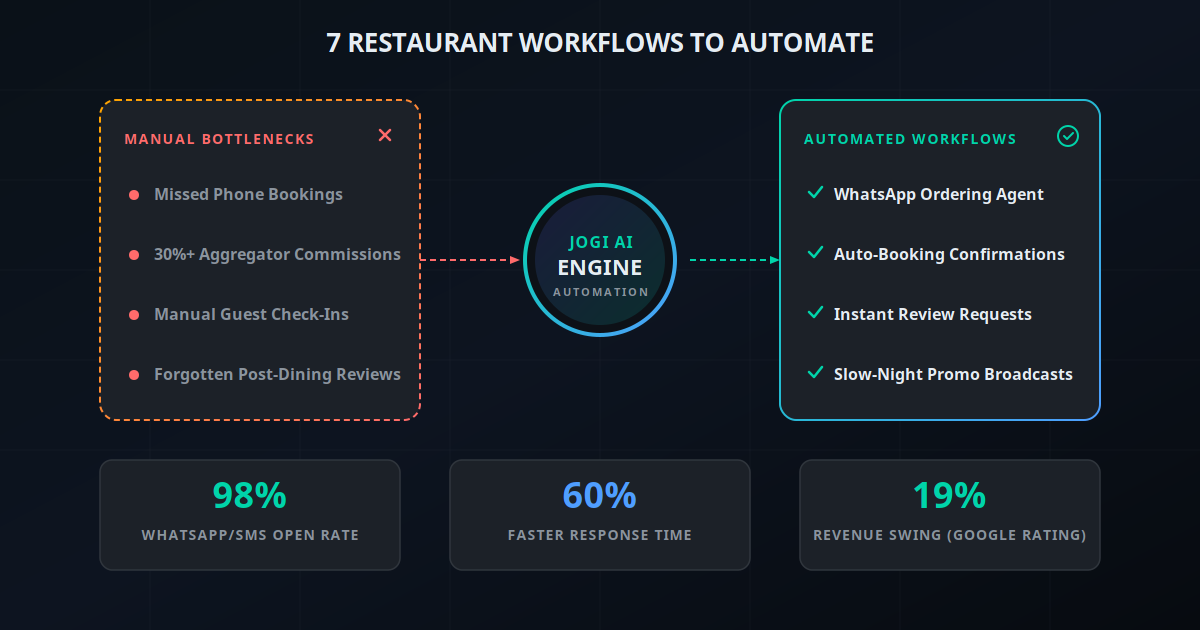
- Unanswered Calls: During service rushes, up to 18% of incoming booking calls were missed entirely because the host staff was actively seating tables. Guests who got busy signals or went to voicemail rarely left messages; instead, they simply booked at competing restaurants.
- No-Shows and Late Cancellations: With no automated reminder system, hosts had to manually call every weekend reservation on Friday afternoon to confirm. This was an arduous chore that hosts frequently skipped due to floor demands. Consequently, the group suffered an average weekend no-show rate of 14%, leaving premium tables empty during prime dinner seatings.
- Inconsistent CRM Data: Customer contact details, food allergies, and seating preferences were rarely recorded accurately. When a regular Bandra guest dined at the Colaba branch, the Colaba staff had no record of their VIP status, leading to missed upselling opportunities and inconsistent service.
"On busy Friday nights, our Bandra host was literally holding a phone between her shoulder and ear while leading a party of six to their table. We were either making our physically present guests feel ignored, or we were letting callers ring out. We were losing thousands of rupees in covers every single weekend."
— Rajesh Mehta, Managing Director, Indus Bistro Group
The Centralised AI Booking Solution
The group needed a solution that could handle inbound booking inquiries instantly, 24/7, without requiring additional head office staff. They partnered with Jogi AI to build an autonomous reservation workflow. Instead of routing calls to individual host stands, the group established a single centralised booking number hosted on a cloud-based WhatsApp Business API and an automated SMS system, managed by a custom AI reservation assistant.
When a guest dialled any of the location numbers or sent a message to the group line, Jogi AI's system intercepted the inquiry. The conversational assistant would guide the guest through a quick, natural booking flow, confirming details like guest count, date, time, location preference, and dietary restrictions. The AI then automatically queried the group's table management database, validated availability, logged the reservation, and issued an instant confirmation link via WhatsApp.
How It Works: Real-time Routing & Capacity Rules
The core of the system lies in its intelligent routing logic. Because the five venues have different seat counts, operating hours, and booking rules, the AI must act as a central traffic controller. The database routing flow works through the following sequence:
Inquiry Reception: The guest sends a reservation request via WhatsApp, web chat, or SMS (e.g., "Need a table for 4 in Bandra this Saturday at 8 PM").
Intent Parsing & Parameter Extraction: The AI extracts key parameters: Location (Bandra), Guest Count (4), Date (Saturday, June 20), and Time (8:00 PM).
Real-time API Capacity Check: The AI queries the table layout API for the Bandra branch, checking if a 4-top table is open for the 8:00 PM slot, accounting for the venue's average turn time (120 minutes).
Intelligent Cross-Location Backup Routing: If the Bandra location is fully committed, the system checks the Juhu location (located just 15 minutes away). The AI replies: "Bandra is fully booked at 8 PM, but I can secure a table for you at our Juhu beach branch at 8:15 PM, or at Bandra at 9:30 PM. Which works best?"
Centralised CRM Sync: Once the guest confirms, the reservation is written to the table database and synced with the group CRM, tagging the user profile with their preferred dining location and allergic history.
By checking capacity across multiple locations in real-time, the AI prevented guests from abandoning the booking process when their first-choice location was full. This cross-selling mechanism alone captured dozens of bookings each week that would have otherwise gone to competitors.
The Communication Flow: Confirmations, Reminders & Waitlists
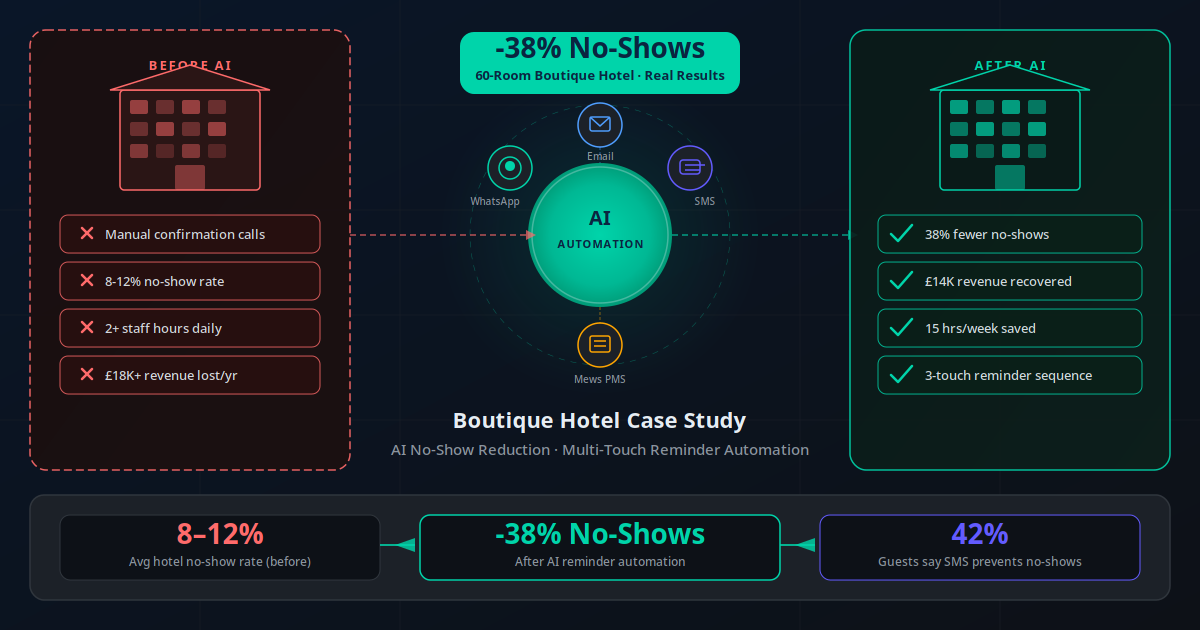
Slate-cleaning no-shows required establishing a polite, automated follow-up sequence. The Jogi AI system was configured to deliver three highly targeted, interactive messages for every booking, ensuring guests kept their reservations without feeling spammed:
- Immediate Booking Confirmation: Sent within 30 seconds of booking. Contains table details, location map directions, and one-click buttons to "Reschedule" or "Cancel".
- 24-Hour Pre-Dining Touchpoint: Sent exactly 24 hours prior to the booking. Re-confirms the table. Guests are requested to click a "Confirm Attendance" or "Release Table" button. If they release it, the table is instantly returned to live inventory.
- 4-Hour Quick-Action SMS: Sent 4 hours before the reservation time. This message includes a custom link that allows guests to notify the host if they are running up to 15 minutes late, preventing hosts from holding empty tables during prime rushes.
For fully booked Friday and Saturday nights, the AI managed an automated waitlist overflow workflow. When a table was cancelled or released 24 hours prior, the system automatically messaged waitlisted guests in chronological order. The first guest to tap "Claim Table" secured the reservation, and the system updated the table management system instantly, completely removing the host staff from the waitlist administration process.
Rollout & System Integration: A 4-Step Playbook
To avoid disrupting operations, the rollout was executed in structured, weekly phases. The Jogi AI team worked alongside the group's IT manager to deploy the centralized workflow over a 4-week rollout playbook:
Database Integration (Week 1): Connected the central Jogi AI engine to the table management database API and centralized CRM via secure Webhooks, establishing uniform guest profiles across all five venues.
WhatsApp & SMS Channel Setup (Week 2): Provisioned the official group WhatsApp Business number and mapped the SMS gateways. Mapped incoming triggers for local location phone numbers to route to the central engine.
Staff Training & Soft Launch (Week 3): Deployed the system at a single location (Bandra) as a live test. Trained hosts to monitor the dashboard rather than answer booking calls, allowing them to focus entirely on physical check-ins.
Full Group Expansion (Week 4): Activated the central routing logic and notification engine across all five locations, redirecting all incoming local landlines to the central AI assistant.
The Results: Before vs. After Metrics
After ninety days of operating with the centralised AI booking assistant, the Indus Bistro Group compiled performance data comparing the new workflow against their historical manual operations. The results showed massive improvements across every operational metric:
| Performance Metric | Before AI Centralisation | After AI Centralisation | Operational / Financial Impact |
|---|---|---|---|
| Unanswered Reservation Calls | 18% of peak calls missed | 0% (AI answers instantly, 24/7) | ~240 additional covers captured monthly |
| Average Weekend No-Show Rate | 14.2% average no-shows | 2.8% average no-shows | Weekend table utilisation increased by 11.4% |
| Staff Labor Spent on Phones | 28 hours per week per branch | 5.6 hours per week per branch | 112 staff hours saved monthly across group |
| Cross-Branch Booking Conversion | 0% (hosts had no visibility) | 12.4% of full-venue requests | 74 bookings redirected to sister venues |
| Monthly Cover Volume | 35,600 covers average | 46,280 covers average | +30% overall cover growth |
| Customer Satisfaction (NPS) | 68 NPS score | 84 NPS score | Fewer wait times, faster phone responses |
By eliminating missed calls and implementing the 24-hour/4-hour confirmation sequence, the group recovered hundreds of covers that would have normally been lost. Additionally, the host staff was able to dedicate their full attention to the physical guests standing in front of them, leading to a noticeable bump in customer service satisfaction scores.
5 Key Lessons Learned from Centralising with AI
Centralizing operations across five distinct restaurants revealed valuable insights about how guests interact with automated reservation tech. Here are the five key lessons the group recorded:
1. Guests Prefer Messaging Over Talking
Over 74% of guests who initiated reservations chose to interact via WhatsApp rather than calling. Texting allows users to book quietly while at work or on the go, making conversational interfaces the highest-converting booking channel.
2. Clear Opt-Out Options Preserve Brand Trust
Making it easy to opt-out of text alerts actually improved engagement. Guests who know they can stop notifications with a simple 'STOP' reply are far more likely to accept transactional SMS confirmations.
3. Backup Location Routing Must Feel Personal
When the requested location is full, the AI must pitch the alternative venue as a benefit, not a compromise (e.g. highlighting a special menu or a unique sunset view at the coastal seafood branch).
4. Table Management APIs Must Update Instantly
For the central AI to function, the table management software must update its database layout instantly when a host seats a walk-in party. Any lag in local data entry can lead to temporary double-bookings.
5. Recovered Staff Labor Must Be Reinvested on the Floor
The 112 hours saved monthly by host staff should not just be cut from payroll. Reinvesting that time into tableside check-ins, guest relations, and host stand hospitality is what drives repeat visits.
Replication Guide for Independent Groups
If you operate a multi-location restaurant group or a single high-volume location, you can replicate this automated booking flow by following this simple playbook:
- Consolidate Your Numbers: Establish a single primary business phone number for your group brand. Route all local venue numbers to call-forward to this central line, or display it as the sole booking call-to-action on your website.
- Select an Open API Booking Platform: Ensure your reservation and table management systems (like Resy, TableIn, or OpenTable) feature open APIs that allow external links (via Make or n8n) to read and write booking data in real-time.
- Set Up the Visual Integrations: Use a low-code platform to build your messaging links. When a new contact is created on your messaging app, check your booking system for matching emails or phone numbers, and auto-confirm the reservation.
- Implement the 24/4 Rule: Deploy the 24-hour confirmation WhatsApp message and the 4-hour quick-update SMS. Keep these messages highly functional, featuring clear action buttons to confirm, edit, or release the reservation.
Conclusion: Autopilot Front-of-House Operations
Automating reservations does not mean removing the hospitality from your restaurant. Instead, it removes the cold, repetitive administrative work from your host stand, allowing your staff to focus entirely on human connection. The Indus Bistro Group went from frantic hostesses juggling ringing phones to a quiet, efficient host stand where every arriving diner was greeted by name, and all reservations flowed smoothly behind the scenes.
If your restaurant is losing covers to busy phone lines, struggling with weekend no-shows, or wasting valuable labor hours on manual call lists, centralizing your reservation workflow with AI is the highest-ROI change you can make this season.