Automated WhatsApp Marketing for Restaurants: Fill Tables on Slow Nights




The Empty-Table Revenue Problem
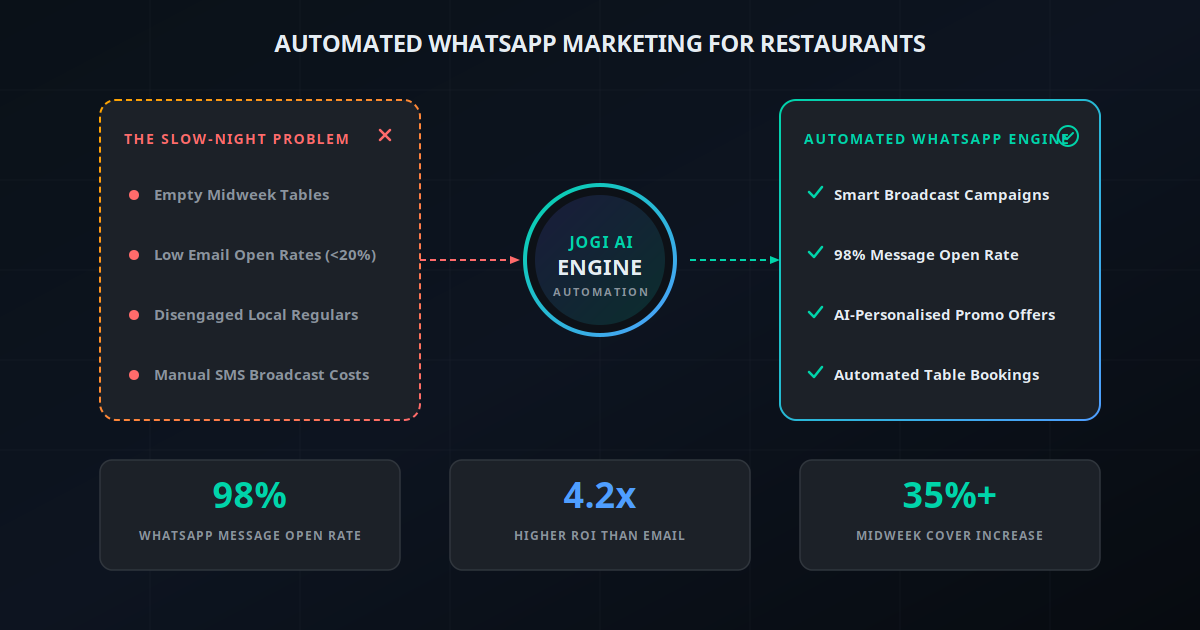
Every restaurant owner knows the frustration of midweek shifts. On Friday and Saturday, the kitchen is humming, the host stand is turning away walk-ins, and the cash drawer is full. But on Tuesday or Wednesday evening, the atmosphere changes. Staff members stand around, kitchen burners are idling, and empty tables dot the dining room.
This midweek slump is a major threat to restaurant margins. A restaurant's fixed costs—including lease payments, base utility rates, insurance, and scheduled kitchen/front-of-house labor—remain identical regardless of whether you serve 20 covers or 200. Because your food costs represent a variable expense, every additional cover you attract on a quiet Tuesday night directly impacts your bottom line, translating almost entirely into pure net profit once basic costs are covered.
Traditionally, restaurants have turned to generic marketing strategies to address this issue: paper coupon drops, broad social media posts, or bulk email blasts. Unfortunately, these methods are increasingly ineffective in a highly competitive, digital-first hospitality landscape.
Midweek covers are the most profitable diners a restaurant can serve. Because fixed operational costs are already paid for by weekend revenue, filling empty tables on slow nights recovers high-margin revenue directly to your bottom line.
Why WhatsApp Outperforms Email for Restaurants
For years, email has been the standard for digital hospitality marketing. While email remains valuable for monthly newsletters or long-form loyalty digests, it lacks the immediacy required to drive same-day dining decisions. If you want to fill an empty table tonight, you need to reach diners where they are looking right now.
The math behind mobile messaging reveals a massive performance gap between email and WhatsApp:
| Marketing Channel | Average Open Rate | Average CTR | Average Response Window | Mobile Friction Level |
|---|---|---|---|---|
| Marketing Email | 18% – 22% | 1.5% – 3% | 2 to 6 hours | High (requires inbox load + link click) |
| WhatsApp Broadcast | 95% – 98% | 15% – 25% | 90 seconds to 5 minutes | Low (interactive quick-reply buttons) |
When a guest receives an email, it often sits unread in a promotions folder for hours, by which time dinner plans have already been made. In contrast, a WhatsApp message lands directly in a highly active personal chat list, generating immediate visibility. For local businesses like restaurants, where purchases are often impulsive and based on proximity, this immediate response window is game-changing.
Building a Compliant Opt-In List
You cannot buy list engagement, and you should never message guests without their consent. Building a high-quality, legally compliant WhatsApp list is a gradual process that relies on organic touchpoints throughout the guest journey.
Here are the three most effective strategies for gathering compliant opt-ins:
1. The Table-Tent QR Trigger
Place clean, high-design QR codes on your table tents, bar counters, or bill folders. Offer an immediate incentive to join the restaurant's VIP Circle (e.g. "Scan to unlock a complimentary dessert on your next visit and receive secret off-menu invites."). When scanned, the QR code opens WhatsApp with a pre-filled message like: "Hi [Restaurant Name], I'd love to join the VIP Circle!"
2. Reservation Checkout Opt-In
Integrate a simple, clear checkbox on your online booking widgets (via Resy, OpenTable, or your site's custom form). Use straightforward language: "[] Yes, send my booking confirmations and occasional exclusive dining offers via WhatsApp."
3. The Digital Guest Wi-Fi Portal
When guests connect to your complimentary in-house Wi-Fi network, ask for their phone number and include an explicit opt-in slider for event and promotion alerts. Ensure the connection screen links clearly to your privacy policy.
Stop Blasting, Start Segmenting
The fastest way to destroy your WhatsApp list is to send generic, bulk broadcasts to every contact. If a regular weekend diner who only orders vegetarian dishes receives a broad Tuesday night steakhouse promo, they will quickly hit the 'Block' or 'Report' button.
An automated marketing workflow segments your customer list in the background based on real dining data:
- The VIP Regulars: Guests who dine at your restaurant more than twice a month. They do not need deep discounts to visit; they want exclusive access, early event bookings, and recognition.
- The Lapsed Diners: Contacts who have booked in the past but have not visited in the last 45 to 60 days. These customers need a targeted win-back nudge to bring your brand back to top-of-mind.
- Midweek vs. Weekend Patrons: Diners who historically visit only on Fridays and Saturdays should be segmented separately from those who have already shown a willingness to dine midweek.
- Dietary & Beverage Profiles: Tagging guests based on order history (e.g., wine lovers, vegetarians, gluten-free) ensures your promotions are highly relevant.
Designing Slow-Night Offers That Work
Flat discounts (such as "20% off all food on Tuesdays") are a lazy marketing tactic that can harm your business long-term. They degrade your brand value, train your regular guests to wait for discounts, and attract price-sensitive diners who rarely return for full-priced weekend meals.
Instead, design value-add promotions that protect your margins while creating a sense of premium exclusivity:
The Culinary High-Value Addition: Instead of slashing prices, offer a complimentary, high-margin item with their meal, such as a chef's house appetizer or a shared dessert platter when they order two main courses.
Exclusive Culinary Previews: Frame your slow nights as creative events. Invite your segmented regulars to sample experimental dishes or seasonal test menus (e.g., "Chef's Test Kitchen Tuesday: Taste three experimental appetizers before they hit our main menu next month.").
Curated Pairings: Package items together to increase average ticket size. Partner with local vineyards or craft breweries to offer curated wine or beer pairings included with a set midweek menu.
AI-Personalised Promo Messages
Using an AI automation layer allows you to generate thousands of unique, hyper-personalized messages dynamically based on customer profiles, rather than sending a single template to all contacts.
An AI agent analyzes guest variables (name, preferred dining time, favorite dish, and past order dates) and drafts custom copy that reads like a personal message from your general manager rather than an automated blast. For example, instead of: "Join us tonight for pasta specials!", the system dynamically generates: "Hi Priya, we haven't seen you since your booking in April. Chef Ravi is preparing his fresh Truffle Tagliatelle tonight—we know how much you enjoyed it on your last visit. We saved a quiet table near the window for you at 7:30 PM if you'd like to drop by."
This level of personalization builds genuine customer relationships and delivers a massive increase in booking conversion rates.
Frictionless booking & confirmation flow
Any friction between reading a message and securing a reservation will reduce your campaign's conversion rate. If a guest must click a link that opens a slow, external web page, re-enter their phone number and email, and manually search for available slots, they will likely abandon the process.
The ideal promotional workflow keeps the entire transaction within the messaging app or uses a single-tap booking bridge:
- The guest receives a personalized WhatsApp message detailing the slow-night offer.
- The message features two clear interactive buttons: [Book Table] and [No thanks, maybe next time].
- Tapping [Book Table] triggers an automated chat assistant that presents 3 available times (e.g., 7:00 PM, 7:45 PM, 8:30 PM) tailored to their historical visit data.
- Once the guest taps their preferred time, the WhatsApp engine communicates with your reservation system API to book the table instantly.
- The system responds with a final confirmation card containing a calendar link and directions. No forms, no manual entry, and no friction.
Timing and Frequency Rules to Avoid Spam
Text messaging is a personal space. While people tolerate promotional emails sitting in their inbox, irrelevant or frequent text alerts feel intrusive and will quickly lead to blocked numbers and spam complaints.
To preserve your list's health, follow these operational rules:
- The Two-Week Capping Rule: Never send promotional broadcasts to a single contact more than once every 14 days. Transactional messages (like reservation confirmations or waitlist alerts) are exempt from this rule.
- Optimize the Send Window: Do not message diners during their busy morning commute or late at night. For same-day dinner bookings, send campaigns on Tuesday or Wednesday afternoon between 2:30 PM and 4:00 PM—exactly when professionals are starting to think about dinner plans after work.
- Immediate Opt-Out Processing: Always include an opt-out hint in your promotions (e.g., "Reply STOP to opt out"). If a customer replies STOP, your database must immediately flag their contact record to prevent any future broadcasts.
Measuring Redemption and ROI
Every marketing effort must justify its expense. Fortunately, automated digital campaigns make tracking redemption rates and measuring exact return on investment straightforward.
To calculate campaign performance, use unique booking links or specialized promo codes. When a diner books via a WhatsApp campaign, tag their reservation in your system with a specific source label (e.g., `WA-SLOW-TUE`). At the end of the month, export your covers and compare the revenue generated by those tables against the campaign costs.
"By shifting our midweek marketing from broad social media posts to automated, segmented WhatsApp broadcasts, we filled an average of 14 extra tables every Tuesday and Wednesday. This recovered over $4,200 in monthly high-margin revenue with a software cost of under $250."
— General Manager, The Foundry GrillSample WhatsApp Message Templates
Below are three highly effective, compliant WhatsApp marketing templates designed for different customer segments:
Template 1: The VIP Customer Nudge (Value-Add Focus)
Header: VIP Early Invite 🍷
Body: Hi [First Name], Chef Carlos is testing a new Smoked Duck Carpaccio menu this Tuesday evening. We are offering our loyalty circle guests a complimentary wine pairing from our new Vineyard Selection with every main course ordered.
We have saved a table for you at [Preferred Time]. Would you like us to confirm your booking?
Buttons: [Confirm Booking] | [View Menu] | [Opt Out]
Template 2: The Lapsed Diner Win-Back Campaign
Header: We miss you at [Restaurant Name] 👋
Body: Hi [First Name], it's been over two months since we last hosted you. We'd love to welcome you back this Wednesday evening. Join us for dinner and enjoy a complimentary signature cocktail or house dessert on us.
Tap below to book a table for tonight.
Buttons: [Reserve Table] | [View Menu] | [Stop Alerts]
Template 3: The Same-Day Urgency Broadcast
Header: Tuesday Dinner Special ⏳
Body: Hi [First Name], we had a couple of last-minute cancellations for tonight, and we have just 4 tables open for dinner. To make it sweet, we're serving our classic wood-fired pizzas with a complimentary house salad for anyone booking these last slots.
Reserve your spot now before they fill up.
Buttons: [Book 7:15 PM] | [Book 8:00 PM] | [No thanks]
WhatsApp Business Policy & Compliance
To run promotional broadcasts, your restaurant must use the official WhatsApp Business Platform (API) rather than a standard personal WhatsApp Business app. The API enforces strict policies to protect the platform's user experience:
- Template Approval: All broadcast messages must be submitted as templates and approved by Meta before they can be sent to customers. Meta checks templates to ensure they do not contain spammy language or violate community standards.
- Opt-In Records: You must keep records of how each contact opted in to receive messages. If Meta receives spam reports for your number, they may ask for proof of consent.
- Messaging Quality Rating: If too many users block or report your business number, your quality score will drop from Green (High Quality) to Yellow or Red. A low rating limits your daily messaging capacity. Keeping messages personalized and capping send frequency prevents this issue.
Scaling Across Locations
For multi-unit restaurant groups, managing marketing lists across multiple locations manually is impossible. The solution is to centralize your database under a single automated engine.
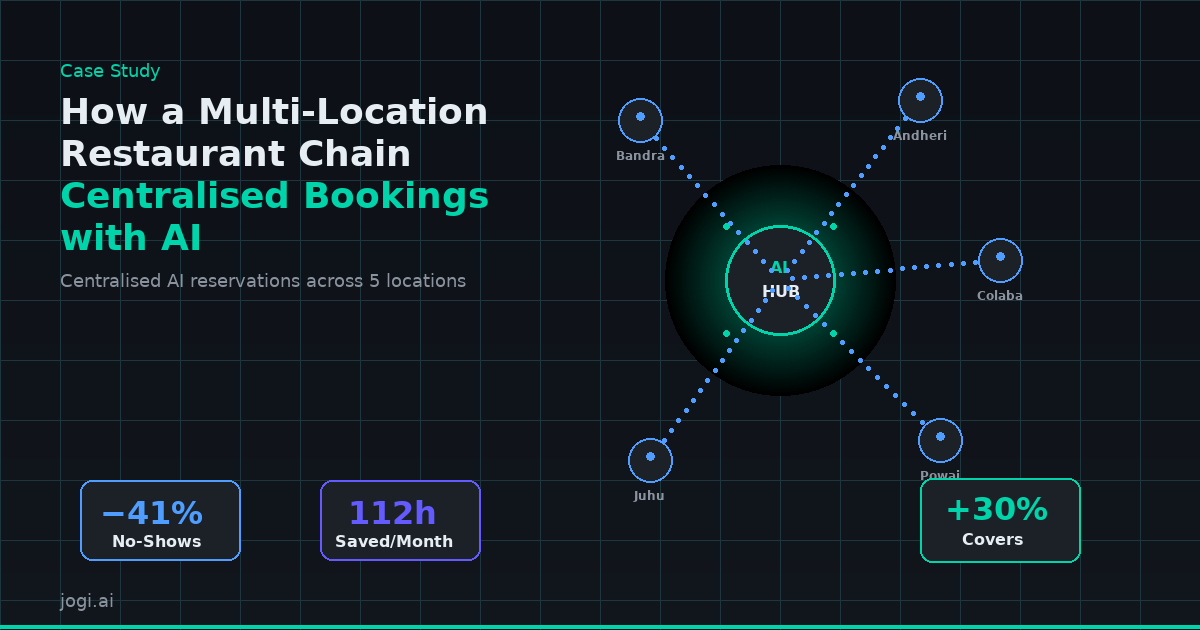
When a customer opts in at your Bandra location, they are tagged with a location attribute (`Bandra`). If you run a Tuesday night promo in Bandra but your Juhu venue is already fully booked, the system automatically runs the broadcast only for contacts tagged with the Bandra location tag. This ensures guests only receive offers for venues they can realistically visit, keeping your marketing budgets highly efficient.
If your restaurant is struggling to fill tables on slow midweek shifts, relying on outdated email campaigns, or looking to build a closer relationship with your local diners, setting up an automated WhatsApp marketing engine is the highest-ROI operational update you can make this season.