AI Automation for Logistics & Delivery: Route, Dispatch and Customer Updates on Autopilot




The Hidden Cost of Manual Logistics Operations
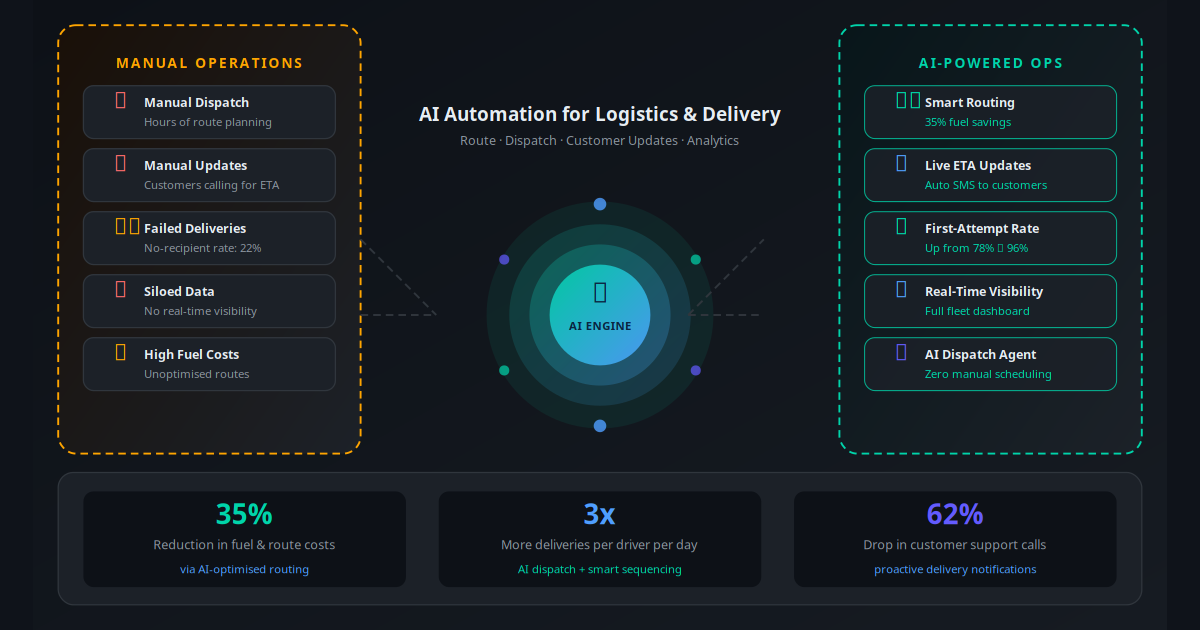
A regional courier business with 12 drivers typically spends 3.5 hours every morning on manual dispatch. A dispatcher plots routes in a spreadsheet, calls drivers to assign jobs, fields inbound calls from customers asking "where is my delivery?", and re-plans the afternoon run when two drivers call in sick or a delivery fails. By midday, the original plan is obsolete and everyone is improvising.
That is not a staffing problem. It is a systems problem — and it is costing you money at every step. Industry data from 2025 shows that manual last-mile logistics operations waste an average of 22% of their total operational cost on inefficiencies that AI automation directly addresses: suboptimal routing, failed delivery re-attempts, reactive customer service, and uncoordinated dispatch.
For a company doing $1.5 million in annual revenue, that is $330,000 per year evaporating into avoidable friction. Not from bad business — from missing systems. The good news is that the AI automation tools to fix this are now affordable, proven, and deployable within weeks rather than months.
This guide covers exactly what AI does in a logistics operation, which applications deliver the fastest ROI, and a practical 8-step implementation roadmap your business can follow starting Monday.
Key Takeaway
Manual logistics operations waste up to 22% of total operational cost on avoidable inefficiencies. AI automation targeting route optimisation, dispatch, customer notifications, and failed-delivery recovery can recover the majority of that waste within 60 days of deployment.
Explore all industry-specific AI automation solutions we offer at Jogi AI.
What AI Actually Automates in a Logistics Business
Before diving into specific tools, it helps to understand which parts of logistics operations are genuinely automatable today versus which still need human judgment.
AI in 2026 handles the repetitive, rules-based, data-processing-intensive work of logistics extremely well. This includes: optimising sequences across hundreds of delivery stops, predicting traffic and dynamically re-routing, sending the right customer notifications at the right time, matching driver capacity to order volume, and generating end-of-day performance reports. These tasks are rule-dense, data-heavy, and time-sensitive — the exact profile where AI outperforms humans at a fraction of the cost.
What still needs humans: resolving genuinely novel exceptions (a road that does not exist in any map, a customer with an unusual access situation), managing driver relationships, and making judgment calls on high-value client issues. The practical picture is that AI handles 80–90% of the daily operational workload, allowing your human team to focus on the 10–20% that actually requires them.
A dispatcher managing 15 drivers manually can supervise 45–60 drivers with AI-assisted dispatch — without additional headcount.
The Data: Logistics AI Results in 2026
The results below are drawn from published case studies and industry benchmarks across courier, e-commerce fulfilment, and B2B logistics operations:
| Metric | Before AI | After AI | Improvement |
|---|---|---|---|
| First-attempt delivery rate | 74–79% | 92–96% | +18 percentage points |
| Fuel & route cost per delivery | Baseline | -25 to -35% | Direct cost reduction |
| Dispatch planning time (AM) | 2.5–4 hours | 12–20 minutes | 85% time saving |
| Customer support calls (ETA queries) | Baseline | -55 to -65% | Proactive notifications |
| Deliveries per driver per day | 18–24 stops | 34–48 stops | +70–100% capacity |
| Invoice processing time | 3–5 days | Same-day automated | Cash flow improvement |
| Driver idle time | 18–22% of shift | 7–9% of shift | -55% idle time |
These are not experimental results. Companies deploying purpose-built AI automation stacks — route optimisation plus automated notifications plus AI dispatch — are seeing these numbers consistently in 2026.
Six High-Impact AI Applications for Delivery Companies
1. AI-Optimised Route Planning
Route optimisation AI calculates the most efficient sequence of stops for each driver, factoring in delivery time windows, vehicle load capacity, traffic forecasts, and driver shift hours. The AI updates routes dynamically during the day as new orders are added, deliveries fail, or traffic conditions change. A 12-driver operation can go from 3-hour manual planning to 15-minute AI planning with comparable or better route quality. Fuel savings alone typically pay for the software within 6–8 weeks.
2. Automated Customer Notifications
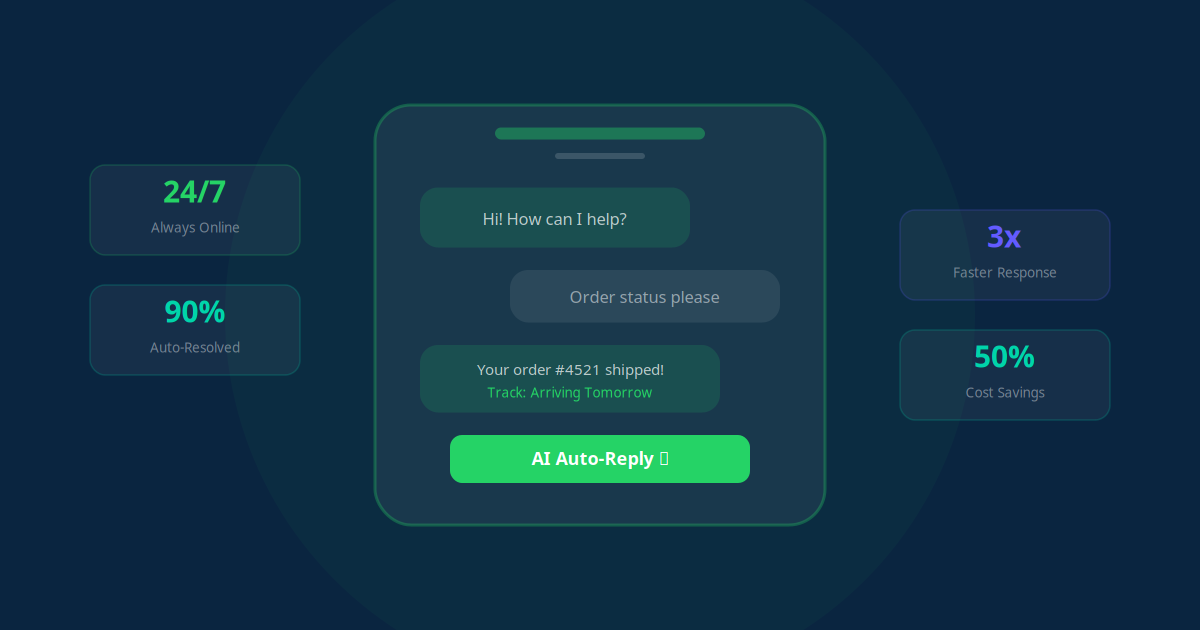
The single most common customer support query for any delivery business is "where is my package?" With AI-automated notifications, customers receive an SMS or WhatsApp message when their order is confirmed, when it leaves the depot, when the driver is 30 minutes away, and when it is delivered or a delivery attempt is made. This proactive communication eliminates 55–65% of inbound support calls without changing anything about your operations. It also improves your Google review scores — customers who get proactive updates rate their experience higher regardless of delivery time.
For businesses already using WhatsApp Business automation, delivery notification flows can be layered directly onto the existing infrastructure without additional tooling.
3. AI Dispatch and Order Assignment
AI dispatch replaces the manual process of deciding which driver takes which job. The system considers driver location, remaining capacity, shift end time, traffic conditions, and delivery priority — and assigns jobs automatically. Drivers receive updated job lists on their app in real time. Human dispatchers shift from "doing dispatch" to "supervising exceptions" — a fundamentally different and more manageable workload.
4. Failed Delivery Prevention and Rescheduling
Failed delivery attempts cost an average of $12–$18 per re-attempt across the industry, including driver time, fuel, and administrative overhead. AI systems reduce failed deliveries by proactively contacting customers before the delivery window to confirm availability, collecting alternative instructions ("leave with neighbour"), and offering a narrower time window when the customer can commit to being present. Failed attempts that do occur are automatically rescheduled and re-routed for the next available slot without dispatcher intervention.
5. Automated Invoicing and Proof of Delivery
Driver apps can capture digital proof of delivery — photo, signature, timestamp, GPS coordinates — which triggers automatic invoice generation and customer notification. This eliminates end-of-day manual invoice processing, reduces disputed deliveries, and accelerates your cash flow. Connecting this to automated invoicing workflows creates a seamless order-to-cash process that requires zero manual data entry.
6. AI Customer Support Chatbot
An AI chatbot trained on your tracking system, delivery policies, and FAQ handles the inbound enquiries that do get through — delivery status, rescheduling requests, address changes, complaint submission. The chatbot integrates with your tracking system to give real-time, accurate answers rather than generic responses. Complex issues are escalated to your team with full context. This is the same AI-driven customer support model described in our customer support workflow automation guide, applied to logistics-specific use cases.
Real-World Use Cases by Business Type
Regional Courier — 8 Drivers, Mixed B2B and B2C Deliveries
Problem: 3+ hours of daily manual dispatch, 28% failed delivery rate, constant inbound calls from B2C customers. Solution: AI route optimisation (OptimoRoute) + automated SMS notifications via WhatsApp API + AI chatbot for ETA queries. Result: Dispatch reduced to 20 minutes, failed deliveries down to 11%, inbound support calls dropped 58%, and the same fleet handled a 40% volume increase with no new hires within 6 months.
E-Commerce Fulfilment — 3PL with 50+ Daily Shipments
Problem: Manual order import from Shopify and WooCommerce stores into dispatch system, delays in shipment notifications to end customers, inconsistent proof of delivery. Solution: AI workflow automation connecting store platforms to dispatch software, automated post-shipment notifications with tracking links, digital POD capture with auto-invoice trigger. Result: Order processing time from 45 minutes to 4 minutes, customer CSAT score up 22 points, invoice payment lead time reduced from 12 days to 3 days.
Food & Grocery Delivery — Time-Critical Last-Mile
Problem: Tight delivery windows, high rate of order changes and additions during the day, driver communication via phone eating dispatcher time. Solution: Real-time AI dispatch with dynamic re-routing as orders are added, WhatsApp-based driver communication replacing phone calls, customer notifications with live 20-minute delivery windows. Result: On-time delivery rate improved from 71% to 91%, dispatcher phone time reduced by 4 hours per day, and order capacity grew 35% with the same team.
B2B Freight Broker — Multi-Stop Commercial Deliveries
Problem: Manual quote generation for multi-stop commercial clients, slow invoice approval process, no visibility for clients on delivery status. Solution: AI-assisted quote generation using historical rate data, automated client delivery dashboards with live tracking, CRM-integrated workflow tracking each shipment from quote to invoice. Result: Quote response time reduced from 4 hours to 18 minutes, client retention improved 31%, and one account manager now handles the client portfolio previously requiring three people.
Medical Supply Distributor — Compliance-Critical Deliveries
Problem: Chain-of-custody documentation done manually, compliance reporting time-consuming, signature collection unreliable. Solution: Digital signature capture with timestamped GPS, automated compliance report generation, AI-managed audit trail for each delivery. Result: Compliance reporting time dropped 87%, zero failed audits in 12 months post-implementation, and the compliance officer recovered 15 hours per week previously spent on manual documentation.
Step-by-Step Implementation Roadmap
This 8-week roadmap is designed for a logistics or delivery business with 5–50 drivers. Each phase delivers standalone value — you do not need to complete all phases before seeing results.
Week 1 — Automated Customer Notifications: Connect your dispatch or order management system to a WhatsApp or SMS notification service. Build milestone triggers: order confirmed, out for delivery, 30 minutes away, delivered, failed attempt. This phase alone reduces inbound support calls by 40–60% and requires no changes to driver operations.
Week 2 — Route Optimisation Setup: Deploy your route optimisation tool (see comparison table below) and input your delivery zones, vehicle profiles, and driver shift parameters. Run AI-planned routes alongside your manual routes for one week to compare performance before full cutover. Most companies see route time and distance improvements of 20–30% in the first AI-planned week.
Week 3 — Driver App Integration: Ensure your drivers have the companion app for your route optimisation tool installed and trained. Run a half-day workshop on digital proof of delivery capture and job-status updates. Driver adoption is the critical success factor — invest time in this step rather than rushing through it.
Week 4 — Failed Delivery Reduction: Implement pre-delivery confirmation messages — an automated WhatsApp message sent 2 hours before the delivery window asking the customer to confirm availability or provide alternative instructions. Set up automatic rescheduling workflows for failed attempts so dispatchers are not manually re-booking these.
Week 5 — CRM and Order Management Integration: Connect your customer relationship management system to your dispatch platform so that customer contact history, delivery preferences, and order records are synchronised. This enables CRM automation workflows like automatic follow-up after delivery and loyalty triggers for high-frequency customers.
Week 6 — Automated Invoicing: Connect digital proof-of-delivery data to your invoicing system. When a driver marks a delivery complete with a signed POD, the invoice is generated automatically and sent to the client. Connect to your accounting software for automatic payment reconciliation. This eliminates end-of-day invoice processing entirely.
Week 7 — AI Customer Support Chatbot: Deploy a trained chatbot on your website and WhatsApp channel. Train it on your tracking system API, delivery policies, rescheduling options, and FAQ. Build escalation paths so complex issues are routed to your team with full conversation context. Reference the RAG-powered chatbot guide for building a chatbot that gives accurate, knowledge-base-grounded answers rather than generic responses.
Week 8 — Analytics and Continuous Improvement: Build your operations dashboard covering: on-time rate, first-attempt rate, cost per delivery, driver utilisation, and customer satisfaction. Set up automated weekly reports sent to operations managers. Use AI workflow automation to flag anomalies — a driver with unusual idle time, a route with systematic delays, a delivery zone with high failed-attempt rates — so you can investigate proactively rather than reactively.
AI Tool Stack: What Logistics Companies Actually Use
| Category | Tool Options | Best For | Monthly Cost (approx.) |
|---|---|---|---|
| Route Optimisation | OptimoRoute, Circuit, Onfleet, Route4Me | 1–200 driver operations | $39–$299 |
| Customer Notifications | Twilio, WhatsApp Business API, Bird | SMS/WhatsApp milestone alerts | $20–$150 |
| Workflow Automation | Make (Integromat), n8n, Zapier | Connecting disparate tools | $9–$99 |
| AI Chatbot | Custom RAG build, Tidio, Intercom AI | Customer enquiry deflection | $29–$199 |
| Digital POD + Invoicing | Onfleet, Bringg, + Xero/QuickBooks | Proof of delivery + billing | $49–$249 |
| Fleet Analytics | Samsara, Verizon Connect, Motive | GPS tracking + driver behaviour | $25–$50/vehicle |
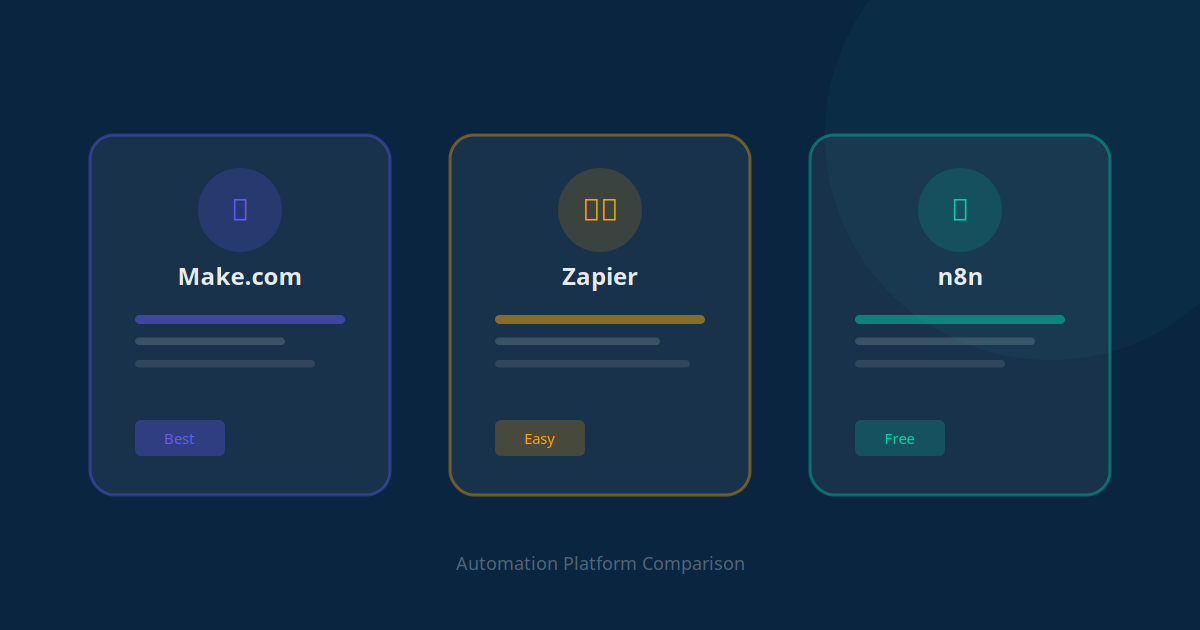
For connecting these tools without custom development, Make vs Zapier vs n8n covers the right automation platform for your technical level and budget. Most logistics operations find Make or n8n gives the right balance of power and affordability.
ROI Breakdown: The Numbers That Matter
"We went from 3 hours of morning chaos to 15 minutes of AI-generated routes. Our drivers now do 40% more stops per day and our customers never need to call us for an ETA — they get a text before they even think to ask."
— Operations Director, regional courier, 14 driversHere is how the ROI calculation looks for a typical 10-driver delivery operation running $800,000 in annual revenue:
- Route optimisation savings: 28% reduction in fuel and distance costs. At $8,000/month in fuel, that is $2,240/month recovered — or $26,880/year.
- Increased delivery capacity: 40% more stops per driver per day without adding headcount. At current volume, this allows business growth without fleet expansion. At $80 average revenue per delivery, 4 extra stops per driver per day across 10 drivers is $3,200 in additional daily revenue capacity.
- Dispatcher time recovery: Reducing daily dispatch preparation from 3 hours to 15 minutes frees 2.75 hours per day. That is 57 hours/month at a $35/hour cost — $2,000/month in labour savings or redeployment to higher-value work.
- Failed delivery cost reduction: Moving from 24% failed first-attempt to 8% on a 200-delivery-per-day volume eliminates 32 re-attempts per day. At $14 average re-attempt cost, that is $448/day — $11,648/month saved.
- Customer support call reduction: At 1 hour per day of dispatcher time handling inbound ETA queries, eliminating 60% of these queries saves 18 hours/month — $630/month in labour.
Total monthly value: approximately $43,000+. Monthly tool cost for this AI stack: $600–$900. The economics are not marginal — they are transformational. This is why logistics AI adoption is accelerating faster than almost any other SMB sector in 2026.
For a structured way to calculate the exact ROI for your operation, the AI automation ROI calculator guide provides a framework applicable to any logistics business size.
Common Mistakes to Avoid When Implementing Logistics AI
Trying to automate everything at once
The most common failure mode is an over-ambitious rollout that tries to connect eight systems simultaneously. When something breaks — and something always does during initial setup — you cannot isolate the cause. Start with customer notifications, prove the value, then layer in route optimisation, then CRM integration. Sequential phases that each deliver standalone value are far more likely to succeed than a simultaneous big-bang implementation.
Skipping driver adoption work
Route optimisation software is only as good as the compliance rate of your drivers. A driver who ignores the AI-planned sequence and does stops in their personal preferred order destroys the efficiency gains the AI created. Spend real time on driver training, explain the benefit to them (fewer total kilometres means less exhaustion, earlier finish times), and monitor compliance in the first weeks to catch issues early.
Not integrating notifications with real tracking data
Customer notifications that send "your delivery is on the way" without linking to real tracking data frustrate customers rather than satisfying them. Ensure your notification system reads actual GPS and job-status data from your dispatch platform — not just order status from your backend system. The value of proactive notifications is destroyed if customers receive inaccurate ETAs.
Automating a broken process
AI automation speeds up and scales whatever process you feed it. If your current dispatch process has systematic problems — certain zones are consistently underserved, certain delivery types always create exceptions — fix these process issues before automating. Otherwise you automate the dysfunction and it becomes harder to see and address. Map your current workflow honestly before building automation on top of it.
No human escalation path
AI chatbots and automated notification systems occasionally encounter situations they cannot handle — a genuinely angry customer, a delivery emergency, a complaint requiring authority to resolve. Build clear escalation paths into every automated touchpoint. Customers who hit a wall in an automated system and cannot reach a human are far more likely to leave negative reviews and churn than customers who are promptly connected to a person when needed.
Ignoring lead generation automation
Most logistics companies focus entirely on operational automation and miss the commercial automation opportunity. Your CRM should be automatically following up with prospects who requested quotes but did not convert, generating re-engagement campaigns for lapsed clients, and sending performance reports to retained clients that demonstrate your value. The same AI lead generation principles that apply to other service businesses work equally well in logistics — and few competitors are using them yet.
The Logistics Operations of 2027 Are Being Built Right Now
The logistics and delivery industry is bifurcating fast. On one side are the companies that have deployed AI — route optimisation, automated customer communications, AI dispatch, digital proof-of-delivery — and are handling significantly more volume with the same or smaller teams, at lower per-delivery costs, with better customer satisfaction scores. On the other side are companies still running on spreadsheets and phone calls, watching their margins compress and their best clients drift toward competitors who can offer real-time tracking and proactive communication.
The gap between these two groups will be largely uncloseable within 18–24 months. The companies that have built AI operations infrastructure now will have compounding advantages in cost, capacity, and customer experience that manual operations cannot match. The investment required to cross the gap is not large — $600–$900 per month for a comprehensive AI stack — but the window where that investment delivers a competitive advantage (rather than merely keeping pace) is closing.
If you want to see exactly which AI automations would deliver the highest ROI for your specific logistics operation — based on your driver count, delivery volume, and current pain points — use the AI Business Twin for a free, personalised analysis in under 10 minutes.
Frequently Asked Questions
How does AI route optimisation work for delivery companies?
AI route optimisation analyses all your scheduled deliveries for a given time window and calculates the most efficient sequence and path for each driver, factoring in traffic data, delivery time windows, vehicle capacity, and driver shift constraints. The AI continuously re-optimises routes in real time as conditions change — traffic incidents, new orders added, or failed delivery attempts — and pushes updated instructions directly to the driver app. Companies typically see 25–35% reductions in total kilometres driven within the first month.
What is the first AI automation a logistics company should implement?
For most logistics and delivery businesses, automated customer notifications are the highest-impact, lowest-effort starting point. Setting up automatic SMS and email updates at each delivery milestone — order confirmed, out for delivery, 30 minutes away, delivered, or failed attempt — immediately reduces inbound customer support calls by 40–60% and improves customer satisfaction scores without requiring any changes to your core dispatch or routing operations.
Can AI dispatch replace a human dispatcher?
AI dispatch handles the routine, rules-based elements of dispatching extremely well: assigning orders to available drivers, sequencing routes, re-routing around traffic or failed deliveries, and sending driver notifications. Most businesses keep a human dispatcher for edge cases — driver emergencies, major disruptions, and high-value client relationship management. The practical result is that one dispatcher can manage 3–5 times more routes with AI support than without it.
How much does AI automation cost for a small delivery company?
A practical AI automation stack for a small delivery operation of 5–20 drivers typically costs $300–$800 per month, covering route optimisation software, automated customer notifications, CRM integration, and a basic AI customer support chatbot. This compares to the cost of a single additional dispatcher at $2,500–$4,000 per month. Most small logistics businesses see full ROI within 45–60 days of deployment.
Does AI help with failed delivery attempts?
Yes — and this is one of the highest-ROI use cases. AI systems can proactively contact customers before the delivery window to confirm someone will be home, offer a specific arrival time for confirmation, and automatically rebook failed attempts for the next available slot with an alternative delivery instruction. Companies using proactive AI notifications for delivery confirmation typically improve their first-attempt delivery rate from the industry average of 78% to 92–96%, which directly reduces the cost of redelivery.
What CRM and logistics tools integrate with AI automation platforms?
Most modern AI automation platforms connect with common logistics and delivery tools via API or native integration. Popular integrations include route optimisation tools like Circuit, OptimoRoute, and Onfleet; CRM platforms like HubSpot and Salesforce; communication tools for WhatsApp and SMS; accounting systems like Xero and QuickBooks; and e-commerce platforms like Shopify and WooCommerce for delivery triggers. The integration layer is typically handled by platforms like Make or n8n, which connect these systems without custom development.
How long does it take to implement AI automation for a delivery business?
A phased implementation for a small-to-medium delivery business typically takes 4–8 weeks from start to full operation. Week one covers automated customer notifications. Weeks two and three address route optimisation setup and driver app integration. Weeks four through six focus on CRM integration and AI dispatch rules. Weeks seven and eight handle analytics dashboards and AI chatbot deployment. Each phase delivers measurable value before the next begins, so you see returns throughout the process rather than waiting for a big-bang launch.
Can AI automation help with driver management and compliance?
AI automation supports driver management through automated shift scheduling, digital proof-of-delivery capture, driving hours compliance tracking, and performance analytics dashboards. Some platforms also use AI to flag driver behaviour patterns — excessive idle time, off-route detours, or delivery time outliers — that supervisors can then address proactively. This reduces compliance risk and gives operations managers visibility they previously had to chase manually.