AI Automation for Salons & Spas: Fill Every Chair and Eliminate No-Shows




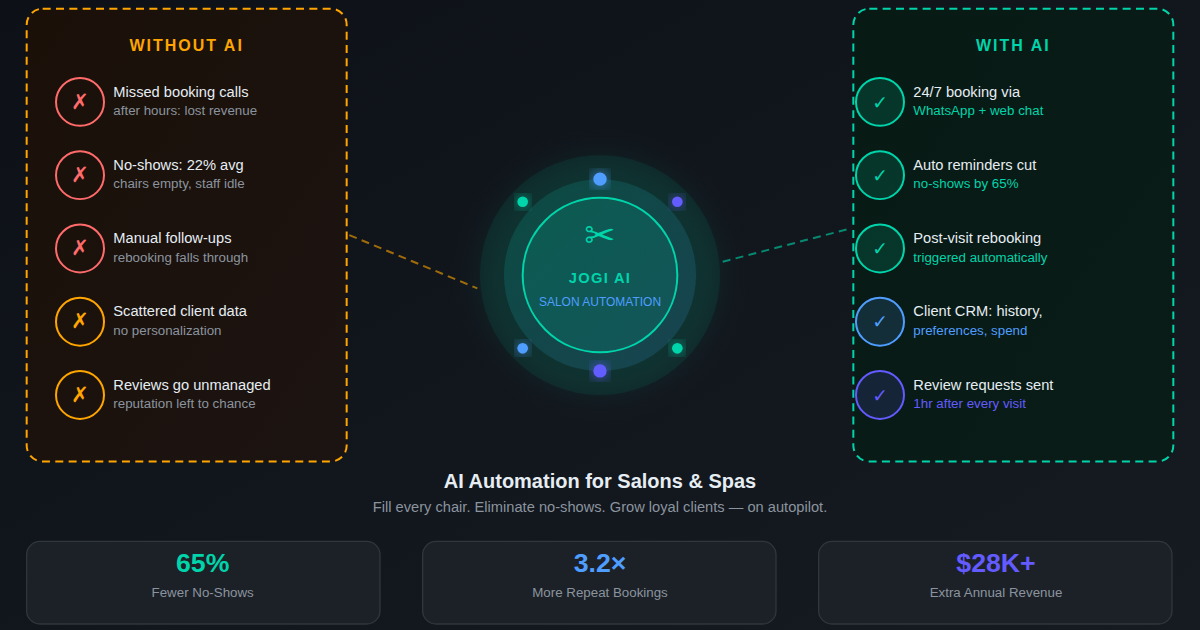
A single no-show costs your salon more than the missed service ticket. Stylists sit idle, the slot cannot be filled on short notice, and the overhead — rent, utilities, wages — runs regardless. Multiply that by 15 no-shows per week across a 4-chair salon and you are looking at $66,000 in lost revenue every year. Not because your service is bad. Because your booking and reminder system has gaps that AI can close completely.
The beauty industry loses an estimated $26 billion annually to no-shows and last-minute cancellations. The fix is not hiring a full-time receptionist. It is deploying an AI system that books 24/7, sends multi-touch reminders, fills cancelled slots instantly, and follows up after every visit — all without a human doing a single thing.
This guide covers the exact automation workflows, tools, and implementation steps that salons and spas are using in 2026 to recover that lost revenue — and what your business can realistically expect within 90 days.
The Revenue Leak Every Salon Owner Ignores
Most salon owners know they have a no-show problem. Few have calculated what it actually costs. Here is the math for a typical mid-size salon:
- 4 stylists, each booked 8 slots per day, 5 days per week: 160 bookings per week
- Industry average no-show rate: 18% — that is 29 missed slots per week
- Average service ticket: $85
- Weekly revenue lost: $2,465. Annual revenue lost: $128,180
That figure does not include late cancellations that could not be refilled, walk-in slots that were not captured because nobody answered the phone, or clients who never rebooked after a gap because nobody followed up. The full leakage is typically 20–35% of potential revenue.
The other hidden cost: 62% of calls to small businesses go unanswered. A client calls at 7 PM to book for Saturday morning. You are closed. They call a competitor. That booking and every future visit from that client is gone — not because of bad service, but because of a capacity gap that AI eliminates entirely.
"We were losing around $4,000 a month to no-shows and after-hours missed calls. Within 6 weeks of setting up automated reminders and a WhatsApp booking bot, that number dropped to under $600. Same staff, same prices, just better systems."
Key Takeaway
No-shows, unanswered calls, and failed rebooking are not operational inconveniences — they are quantifiable revenue leaks. A 4-chair salon with an $85 average ticket can recover $43,000 to $90,000 annually by automating just three workflows: reminders, missed-call booking, and post-visit follow-up.
Explore all industry-specific AI automation solutions we offer at Jogi AI.
What AI Automation Actually Does for Salons and Spas
AI automation for beauty businesses is not one technology — it is a connected stack of workflows that each solve a specific revenue problem. The four core components:
Conversational Booking (AI Chatbot + WhatsApp)
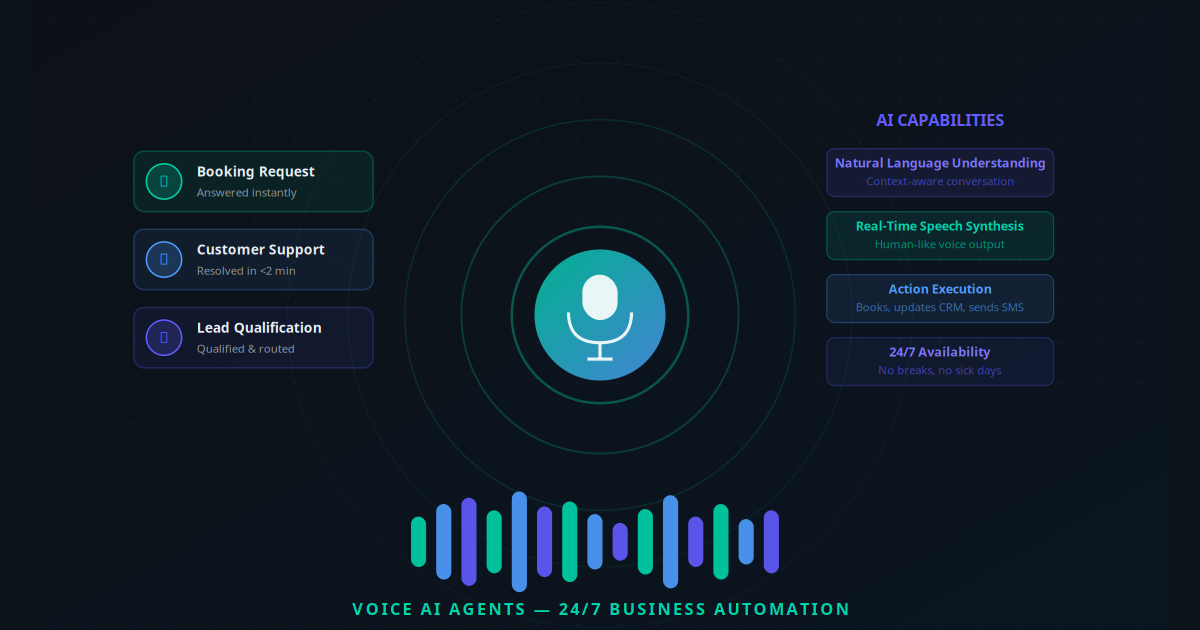
An AI bot handles the complete booking conversation via WhatsApp, your website chat widget, or Instagram DM. The client says "I want to book a balayage on Friday afternoon" and the AI checks your calendar, presents available slots with stylist options, confirms the booking, takes a deposit if required, and sends a calendar link — all in under 90 seconds. No receptionist needed, 24 hours a day, 7 days a week.
Multi-Touch Appointment Reminders
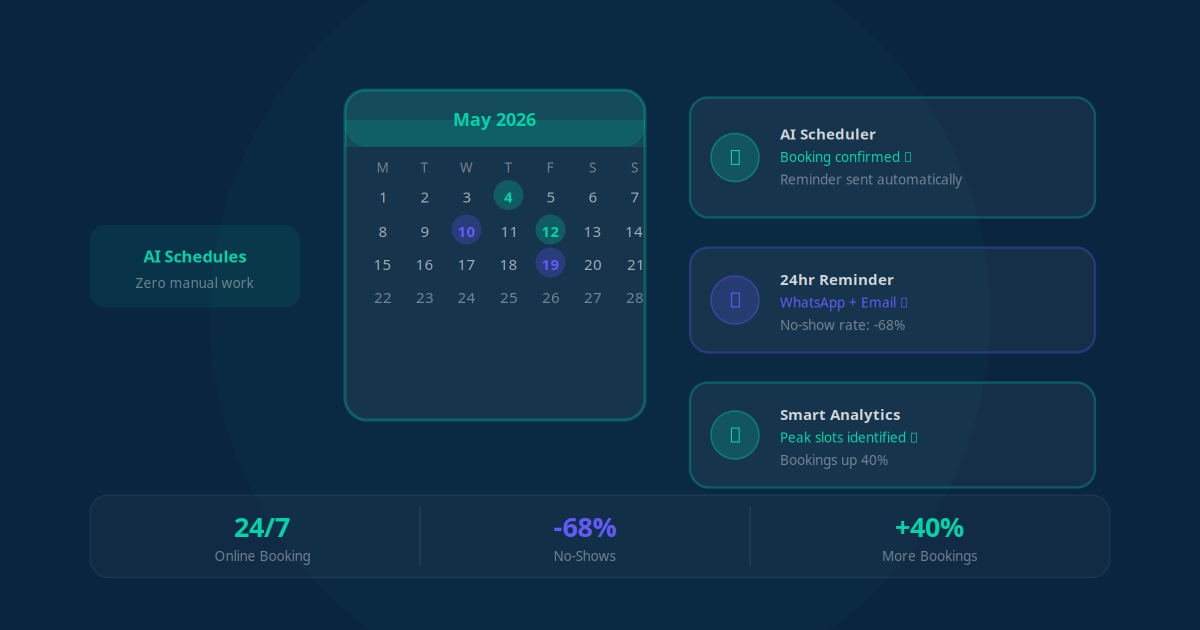
The moment a booking is confirmed, an automated sequence launches: a confirmation message immediately, a reminder 48 hours before, and a final prompt 2 hours before the appointment. Each message includes a one-tap confirm, reschedule, or cancel link. When a client reschedules, the freed slot is automatically offered to the waiting list. This system alone reduces no-shows by 55–70% at most salons.
Post-Visit Rebooking and Loyalty Automation
48 hours after a visit, a personalised message goes out: "Thanks for coming in, [Name]! Your colour typically needs a refresh in 6–8 weeks — want to lock in your next appointment?" Clients who do not respond within 4 days get a gentle follow-up. Salons using this workflow see repeat visit rates climb from 34% to 68% within 90 days.
Review and Reputation Automation
One hour after checkout, a brief message asks the client how their experience was. Happy clients are guided directly to your Google or Instagram review page. Unhappy clients are routed to a private feedback form so you can resolve the issue before it becomes a public complaint. Salons typically see their Google rating improve by 0.4–0.8 stars within 60 days.
The Revenue Impact: What the Data Shows
Across Jogi AI client deployments and publicly available industry benchmarks, here is what beauty businesses consistently see:
| Metric | Before AI Automation | After AI Automation | Typical Timeframe |
|---|---|---|---|
| No-show rate | 18–22% | 5–8% | 30–60 days |
| After-hours bookings captured | 0% (missed calls) | 100% (AI answers 24/7) | Day 1 |
| Client rebooking rate | 34% | 61–68% | 60–90 days |
| Average Google review rating | 3.8–4.1 | 4.5–4.8 | 60–90 days |
| Time spent on admin per week | 14–20 hours | 2–4 hours | Day 1 |
| Revenue recovered per month | — | $2,200–$6,500 | 30–90 days |
The automation cost for a full stack — booking bot, reminders, rebooking, and review campaigns — runs $150–$400 per month, depending on your booking platform and message volume. The average ROI in year one is 12-to-1.
The 6 AI Workflows to Automate First
1. 24/7 WhatsApp Booking Bot
Connect your booking platform (Fresha, Vagaro, Acuity, or Booksy) to a WhatsApp Business automation layer. The AI handles the complete booking conversation: service selection, stylist preference, date and time, deposit capture, and confirmation. Clients on your Instagram or Google Business profile can be directed to WhatsApp for immediate booking — the platform where 68% of beauty clients already prefer to message.
2. Automated No-Show Prevention Sequence
Configure a three-touch sequence for every booking: (1) instant booking confirmation with add-to-calendar link, (2) 48-hour reminder with confirm/reschedule buttons, (3) 2-hour reminder. When a client does not confirm, the system flags the booking and automatically messages the next client on the waiting list. This fills cancelled slots within minutes instead of leaving them empty.
3. Waitlist Automation
Every time a client books a popular slot, the system asks if they want to join a waitlist for any earlier cancellations. When a slot opens, the first person on the waitlist gets an automatic message with a one-tap claim link. If they do not claim within 30 minutes, the offer goes to the next person. This turns every cancellation into a filled appointment.
4. Post-Visit Rebooking Campaign
Using your CRM automation, track the last visit date and typical service interval for each client. When a client is approaching their rebooking window, trigger a personalised outreach: "Your highlights are due for a refresh — here are your stylist's next available slots this week." Clients who respond are taken directly to the booking confirmation. Those who do not respond get a second touch 5 days later with a time-limited offer.
5. Review Generation Automation
One hour after each checkout (triggered by a payment processed or appointment marked complete in your booking platform), the AI sends a quick satisfaction check. A positive response triggers a direct link to your Google review page with a pre-filled prompt. A neutral or negative response routes the client to a private form and alerts you or your manager — giving you the opportunity to resolve the issue before it appears publicly.
6. Lapsed Client Win-Back Campaign
Any client who has not visited in 90+ days is automatically added to a re-engagement sequence. The first message acknowledges the gap ("We miss you at [Salon Name]!") and presents a personalised offer — a small discount or a complimentary add-on. Win-back campaigns in the beauty sector recover 22–31% of lapsed clients when the message is personalised and the offer is relevant to their service history.
Real-World Use Cases by Business Type
Hair Salon (6 Stylists, Urban Market)
Problem: 24 no-shows per week, no after-hours booking, stylists spending 3 hours daily on phone admin. Solution: WhatsApp booking bot + 3-touch reminder sequence + post-visit rebooking. Result: No-shows dropped from 24 to 7 per week (71%), after-hours bookings increased by 38 per week, stylist phone time dropped to 20 minutes daily. Revenue recovery: $3,800 per month within 8 weeks.
Day Spa (4 Treatment Rooms)
Problem: Complex multi-service packages were difficult to book online, leading to long phone calls and frequent double-bookings. Solution: AI chatbot trained on full service menu including treatment durations and contraindications, integrated with Mindbody. Result: 94% of bookings now completed without staff involvement, double-bookings eliminated, and upsell revenue from package add-ons increased by $1,200 per month because the AI consistently presents upgrade options.
Nail Bar (2 Locations)
Problem: High walk-in volume but no system to manage demand or convert walk-ins into loyal regulars. Solution: In-store QR code directing walk-ins to WhatsApp, combined with post-visit automated follow-up to capture their number and preference history. Result: 54% of one-time walk-ins converted to repeat clients within 90 days. Google rating climbed from 3.9 to 4.6 with review automation.
Barbershop (Owner-Operated)
Problem: Solo operator spending 90 minutes every morning returning texts and booking calls from the previous evening. Solution: AI booking bot handling all inbound WhatsApp and Instagram DM booking requests. Result: Morning admin eliminated, 11 new bookings per week captured from after-hours messages that were previously missed, and the owner can now focus entirely on clients during business hours.
Luxury Spa (High-End, Multi-Therapist)
Problem: Clients expected premium service but the booking process was slow and required multiple phone calls for complex packages. Solution: AI bot trained on therapist specialisations, treatment sequences, and preferred booking patterns — with escalation to a human for bespoke group packages. Result: Average booking time reduced from 8 minutes (phone) to 90 seconds (AI chat), client satisfaction scores improved by 18 points, and revenue per client visit increased by $42 through AI-driven upsell recommendations.
How to Implement AI Automation in Your Salon: 7-Step Plan
Audit your current booking gaps. Count missed calls, no-shows, and lapsed clients for the past 30 days. This gives you a baseline and a real dollar figure to compare against after automation — and it determines which workflows to build first.
Choose your booking platform. If you do not already use one, select a platform with API or webhook support — Fresha (free), Vagaro ($25/month), Acuity Scheduling ($20/month), or Booksy ($29/month). This is the data source everything else connects to.
Set up WhatsApp Business API. This requires a Facebook Business Manager account and phone number verification. Your AI automation partner handles this setup — it is not a DIY process, but it takes 3–5 business days. This unlocks programmatic messaging to clients.
Build and train your booking AI. The AI chatbot is configured with your service menu, pricing, stylist availability rules, booking lead time requirements, deposit policy, and business hours. Test with 20–30 real booking scenarios before going live. This is where quality determines everything.
Deploy the reminder sequence. Connect your booking platform to your WhatsApp channel so every new booking automatically triggers the 3-touch reminder sequence: instant confirmation, 48-hour reminder, 2-hour reminder. Add the waitlist fill logic so cancelled slots are offered immediately.
Activate post-visit workflows. Build the post-visit rebooking message (triggered 48 hours after checkout), the review request (triggered 1 hour after checkout), and the 90-day lapsed-client re-engagement sequence. Configure these in your automation platform (Make or n8n are the most flexible options — see the comparison below).
Review and optimise weekly for 30 days. Check which messages have the highest click-through rates, which reminder timing reduces no-shows most effectively, and where the AI booking conversation breaks down. A well-optimised system after 30 days typically outperforms an unoptimised one by 40% in no-show reduction and 60% in rebooking conversion.
Tools and Platforms: What to Use in 2026
The salon AI automation stack combines four layers of tools. Here is what works best in 2026, with cost and integration ratings:
| Tool Category | Top Option | Alternative | Monthly Cost | Integration Ease |
|---|---|---|---|---|
| Booking Platform | Fresha | Vagaro / Booksy | Free–$29 | Excellent |
| WhatsApp Business API | 360dialog | Twilio / WATI | $45–$70 | Good |
| Automation Orchestration | Make (Integromat) | n8n (self-hosted) | $9–$29 | Excellent |
| AI Chatbot Layer | GPT-4o (via API) | Claude 3.5 Sonnet | $15–$50 | Good |
| CRM / Client Records | Built-in booking CRM | HubSpot (free tier) | Free–$45 | Excellent |
| Review Automation | Birdeye | Podium / custom | $200–$299 | Good |
For most salons, the core stack — WhatsApp API, Make, and your booking platform — is sufficient for reminders, booking automation, and rebooking campaigns. The review automation tool is optional if you build a custom flow inside Make. See the Make vs Zapier vs n8n comparison if you are deciding between automation platforms.
If you are evaluating whether to build this yourself or use a managed service, the AI workflow automation guide walks through the build-vs-buy decision with full cost comparison.
ROI Proof: The Numbers Behind the Results
"Within 90 days of deploying the full automation stack, our monthly revenue increased by $6,200 and our front desk team went from answering 80 calls a day to 12. The AI handles everything else."
— Day spa owner, 4 treatment rooms, 6 staffHere is a worked ROI example for a typical mid-size salon:
- Baseline: 4 stylists, 160 bookings/week, $85 average ticket, 18% no-show rate (29 missed slots/week)
- Revenue lost to no-shows per week: 29 × $85 = $2,465
- After automation (65% no-show reduction): 10 missed slots/week = $850 lost vs $2,465 — saving $1,615/week
- Annual no-show recovery: $1,615 × 52 = $83,980
- After-hours bookings captured: 12 new bookings/week × $85 = $1,020/week = $53,040/year
- Rebooking improvement: Repeat rate rising from 34% to 62% on 160 weekly clients adds ~45 return visits/week × $85 = $198,900/year (incremental)
- Total automation cost: ~$300/month = $3,600/year
- Year 1 ROI (conservative, no-shows + after-hours only): ($83,980 + $53,040 − $3,600) / $3,600 = 37.6× return
Even modelling just the no-show reduction — the most conservative scenario — the return on automation investment exceeds 20× in the first year. For deeper detail on how to model automation ROI for your specific numbers, the AI automation ROI calculator guide walks through the exact methodology.
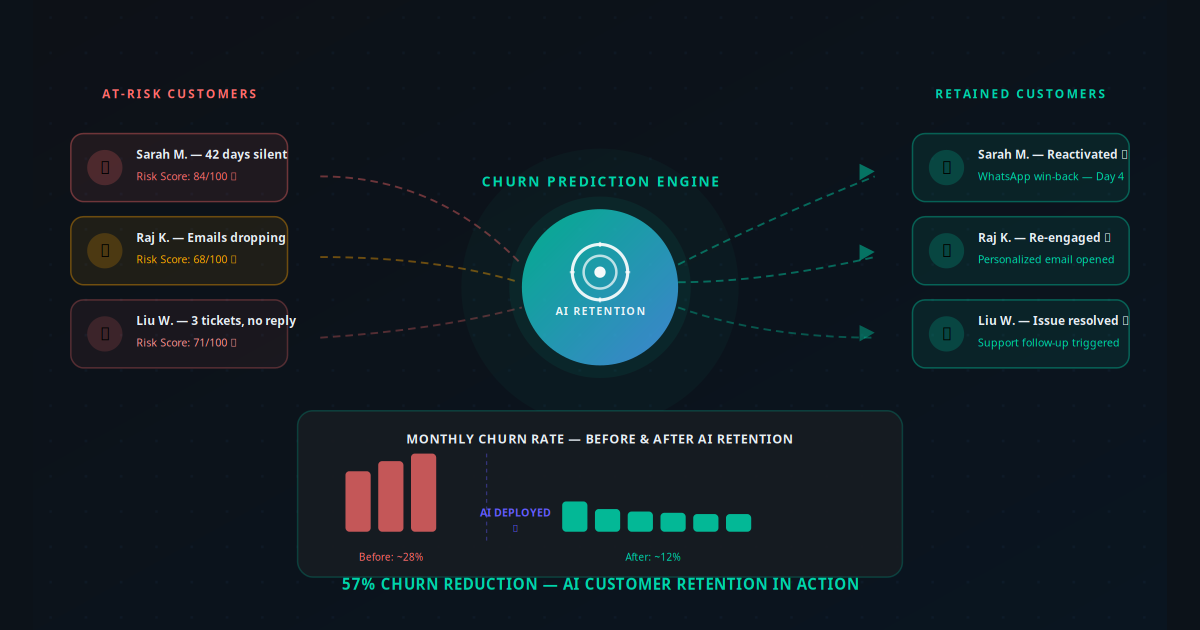
Salons also benefit from improved customer retention through AI-driven churn prevention — the same churn signals that apply to SaaS businesses apply directly to lapsed salon clients: declining visit frequency, lower average ticket, unresponsive to promotions.
Mistakes That Kill Salon AI Projects
Training the AI on an Incomplete Service Menu
If your AI bot does not know the difference between a balayage and highlights, or does not understand that a Brazilian blowout takes 3 hours while a trim takes 30 minutes, it will book incorrectly and infuriate clients. Before launch, document every service with name, duration, price, and any prerequisites or contraindications. This is the most common source of early failures.
Using Generic Reminder Messages
A generic "Reminder: you have an appointment tomorrow" performs 3× worse than a personalised message that includes the client's name, their specific service, their stylist's name, and the address. AI allows full personalisation — use it. Templates that address "Hi [Name], your [Service] with [Stylist] is tomorrow at [Time]" consistently outperform generic reminders in click-through and confirmation rates.
Skipping the Human Escalation Path
Every AI booking system needs a clear escalation path. When a client asks a question the AI cannot confidently answer — a medical contraindication, a complex package request, a complaint — the bot must hand off gracefully rather than giving a wrong answer or going silent. Configure escalation triggers and ensure the human response comes within 60 minutes of escalation during business hours.
Launching Without Testing the Full Booking Flow
Before going live, have 10 people go through the complete booking process from "first message on WhatsApp" to "confirmation received." Test edge cases: what happens when they ask for a stylist who is on leave? What happens when they try to book during a public holiday? What if they want to add a service mid-conversation? These edge cases are where most AI booking bots fail in their first week.
Ignoring the Data After Launch
The automation platform shows you exactly where clients drop out of the booking conversation, which reminder sequence has the lowest confirmation rate, and which rebooking messages generate the most appointments. Review this data weekly for the first 30 days and make adjustments. Salons that optimise their flows in the first month see 40% better results than those who set and forget. This is where AI-driven customer support workflows add a second layer of intelligence — the AI improves its own performance based on what it learns.
Your Next Move: Chairs Full, No-Shows Gone
Every empty chair in your salon is money you already earned and then lost to a system failure — a missed call, a forgotten reminder, a client who needed a nudge to rebook. AI automation does not replace your stylists or change what makes your salon great. It plugs the gaps between great service and consistent revenue: the after-hours bookings that were going to competitors, the no-shows that turned into idle time, the regulars who drifted away because nobody followed up.
The most effective salons in 2026 are not the ones with the best stylists alone — they are the ones where every booking, reminder, and follow-up runs on autopilot so stylists can focus on the chair, not the calendar. The technology exists, the cost is low, and the ROI is proven. The only variable is whether you implement it this month or continue to let the revenue leak run.
Use the AI Business Twin to get a personalised audit of your salon's specific revenue gaps and the exact automation workflows that will recover them — in under 10 minutes, at no cost.
Frequently Asked Questions
Can a small salon with 3 stylists benefit from AI automation?
Absolutely. Small salons often benefit the most because a single missed call or no-show represents a significant share of daily revenue. AI automation handles bookings, sends reminders, and triggers rebooking messages automatically — tasks that previously required a dedicated receptionist. Even a two-chair salon can implement WhatsApp booking and automated reminders for under $200 per month and typically recovers that cost within the first week by reducing no-shows alone.
How does AI reduce no-shows at salons and spas?
AI reduces no-shows through a multi-touch reminder sequence: an SMS or WhatsApp confirmation immediately after booking, a reminder 48 hours before the appointment, and a final reminder 2 hours before. Each message includes a one-tap confirm or reschedule link. When a client reschedules, the vacated slot is automatically offered to clients on the waiting list. Salons using this three-touch system report no-show rates dropping from an industry average of 18–22% to under 6%.
What booking platforms integrate with AI salon automation?
Most popular salon booking platforms have API access or webhook support that allows AI automation to connect directly. Fresha, Vagaro, Mindbody, Acuity Scheduling, Square Appointments, and Booksy all support integrations. Automation tools like Make or n8n can bridge these platforms with your WhatsApp channel, email system, and CRM so every booking, cancellation, and rescheduling triggers the right follow-up sequence automatically.
How much revenue can a salon realistically recover with AI automation?
A mid-size salon with 4 stylists and an average ticket of $85 losing 15 no-shows per week is losing roughly $66,300 annually. Reducing no-shows by 65% recovers around $43,000 of that. Add automated rebooking campaigns that fill 8 more slots per week from lapsed clients and the annual recovery is $43,000 to $75,000, depending on service pricing. Implementation costs for a full AI automation stack run $150–400 per month, making the ROI typically 15-to-1 in year one.
Can AI handle the full booking conversation on WhatsApp?
Yes. A properly built AI chatbot on WhatsApp can handle the complete booking flow: greeting the client, presenting available services, showing stylist availability, confirming the appointment time, collecting a deposit if required, and sending a calendar confirmation. The conversation feels natural because modern AI understands common phrasings and can handle follow-up questions like asking about parking or what to bring. Escalation to a human happens automatically if the AI encounters a question outside its scope.
Does AI automation work for high-end spas with complex service menus?
Yes, and it is particularly valuable for high-end spas. The AI is trained on your complete service menu including treatment durations, contraindications, upsell options, and therapist specialisations. It can guide clients through selecting the right treatment, answer detailed questions about what each service involves, and recommend package upgrades based on the client's history. High-end spas often see the highest ROI because a single recovered booking or upsell is worth significantly more than in a budget salon.
How long does it take to set up AI automation for a salon?
A core automation stack — WhatsApp booking bot, automated reminders, and post-visit rebooking messages — can be operational within 5 to 10 business days. This includes connecting your booking platform, configuring the AI with your service menu and business rules, and testing the full booking flow. More advanced workflows like loyalty campaigns, review automation, and CRM segmentation typically add another 1 to 2 weeks. Most salons are fully live within 3 weeks.
What happens when a client wants to rebook mid-conversation with the AI?
The AI handles rescheduling in the same conversation thread. When a client says they need to change their appointment, the bot confirms the existing booking, shows available alternative slots that match the same stylist or service, and updates the booking instantly. The old slot is immediately released and offered to waitlisted clients. A new confirmation is sent to the client and the stylist's calendar is updated in real time — no manual intervention needed.